.svg?iar=0&hash=F6049510E33E4E6D8196C26CCC0A64A4)

/hfh-logo-main--white.svg?iar=0&hash=ED491CBFADFB7670FAE94559C98D7798)

Digital Tools For Night Shift Workers
Working the night shift can throw off your whole routine. Learn about tools and strategies that can help you sleep better and be more productive.
Adaptive radiation therapy is one of the newest cancer treatment options that combines MRI- and CT-guided radiation therapy with real-time data gathered from artificial intelligence (AI). Henry Ford Health is proud to provide our cancer patients with the latest radiation therapy treatments available.
Here you can learn more about how this transformative new technology works, its advantages and more.
Henry Ford Health is one of the first cancer centers in the world to deliver adaptive radiation therapy. This state-of-the-art technology strengthens our ability to help you beat cancer.
Every patient deserves access to the latest, high-quality cancer care available. We believe that adaptive radiation therapy is the future of highly personalized cancer treatment care. We are proud to offer this world-class cancer treatment to patients in our care, and in your neighborhood.
Find information below about how this treatment targets cancer and why it may be a good option for you.
Noninvasive. Our technology is designed to deliver precise noninvasive treatment that requires no incisions or surgery and no post-surgery recovery period.
Fast. We can deliver highly accurate treatments in a typical 15-minute time slot from start to finish. Shorter treatment time means you can get back to your daily routine sooner.
Personalized. Enabled by its extensive planning and precise contouring capabilities, adaptive radiation therapy can map out the anatomy, target the location of the tumor, and optimize treatment plans in real time. This advanced capability allows us to make decisions based on your specific needs while you are on the treatment couch.
Comfortable. With our spacious machine’s quiet motors and integrated camera and intercom system, our system is designed to provide a positive experience in a reassuring and safe.
Working the night shift can throw off your whole routine. Learn about tools and strategies that can help you sleep better and be more productive.

Workouts like hot yoga and hot Pilates are heating up the gym. Find out what they can—and can’t—do for you.

Dealing with a cancer diagnosis can take a toll on your mental health. An expert shares how art therapy can help you cope.
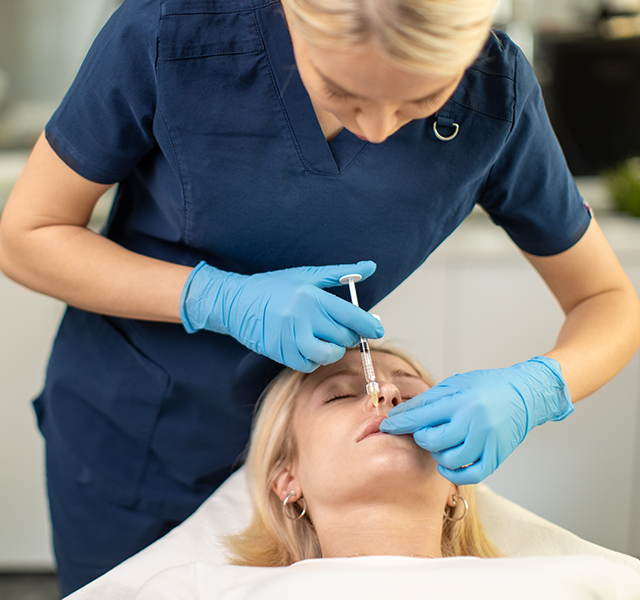
Dermal fillers are usually safe, but there can be problems with improper injection. Learn more about how you can minimize your risk.
We use cookies to improve your website experience. By using this site, you agree to our Terms of Use. Read our Internet Privacy Statement to learn what information we collect and how we use it.