.svg?iar=0&hash=F6049510E33E4E6D8196C26CCC0A64A4)

/hfh-logo-main--white.svg?iar=0&hash=ED491CBFADFB7670FAE94559C98D7798)
Related News
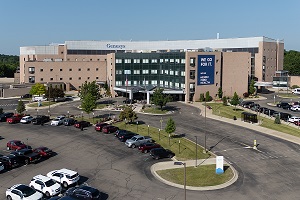



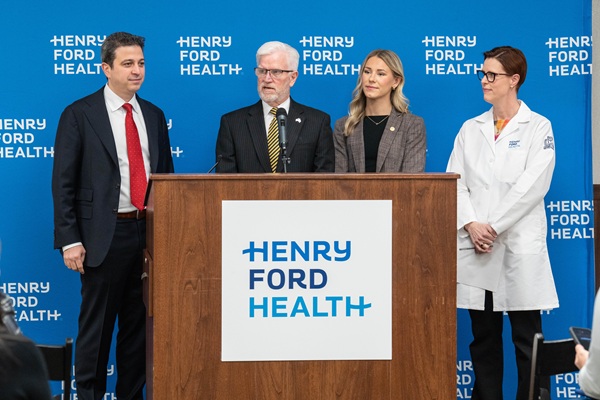

Five Things to Know about Unfair Labor Practice Charges and the Teamsters’ Claims Against Henry Ford Genesys Hospital

GRAND BLANC, Mich.— Teamsters Local 332’s indefinite strike at Henry Ford Genesys Hospital is an economic strike, despite the union’s repeated—and unproven—claims of unfair labor practices. This point is underscored by the statement issued yesterday evening by the National Labor Relations Board’s (NLRB) Region 7 office.
Henry Ford Genesys Hospital vehemently denies all the accusations in the Teamsters' complaints. We are confident the NLRB’s ongoing investigation will ultimately confirm they are nothing more than a meritless attempt at getting leverage at the bargaining table. Unfortunately, under the rules of the NLRB, there is no penalty for filing false or frivolous allegations.
It’s important to note no new charges have been filed since November. The NLRB statement appears to be a response to claims by Teamsters Local 332 that the board is not doing its job.
The Teamsters have a history of falsely declaring a strike based on unfounded ULP charges.
Here are five things to know about ULPs and how they are investigated by the NLRB.
1. Simply claiming a strike is a ULP strike does not make it so.
A strike is only determined to be for unfair labor practices after a thorough investigation by the NLRB, which typically takes years.
2. Filing a ULP charge is easy — and many never result in a confirmed finding.
Anyone can file an unfair labor practice charge, even if the allegation is completely false, frivolous, or unsupported. The act of filing alone does not mean an unfair labor practice occurred, nor does it mean the strike becomes a ULP strike.
3. The NLRB must independently investigate every allegation.
When a ULP charge is filed, the NLRB’s regional staff reviews it to see whether there is evidence that a violation may have occurred. No ULP strike determination can happen without this independent factual investigation.
5. A ULP determination involves multiple layers — and many cases are dismissed along the way.
A strike is only considered a ULP strike if the case survives every stage of the NLRB and federal court process. The process takes years and includes these steps in this order:
1. NLRB investigation
2. Possible NLRB complaint
3. Administrative Law Judge decision
4. NLRB Board review
5. U.S. Court of Appeals enforcement
At any point, if the evidence is insufficient, conflicting, or not credible, the case stops.
For example, in the1995 Detroit newspaper strike, even though the NLRB initially found unfair labor practices, the U.S. Court of Appeals disagreed and rejected enforcement — meaning the strike legally remained an economic strike.
5. Even proven ULPs do not automatically make a strike a “ULP strike.”
On top of proving a ULP violation existed, the union would also have to prove the violation directly caused the strike for the strike to be a ULP strike.
###
MEDIA QUESTIONS: mediarelations@hfhs.org