.svg?iar=0&hash=F6049510E33E4E6D8196C26CCC0A64A4)

/hfh-logo-main--white.svg?iar=0&hash=ED491CBFADFB7670FAE94559C98D7798)
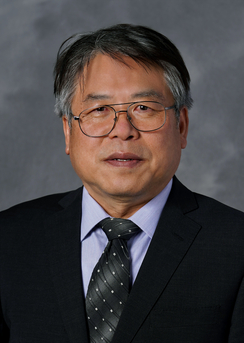
Sahn-Ho Kim, PhD

Specialties: Research
Services: Cancer Research
/hfh-logo-main--white.svg?iar=0&w=300&hash=6384A2E70E92039C36CA5CCBA53F8964)
Board Certification and Education
- University Of Texas, TX, 1993
- Lawrence Berkley National Lab, CA, 2000
- City of Hope National Medical Center, CA, 1995
About Me
Biographical statement
Dr. Kim is an associate scientist at Henry Ford and an associate professor of physiology in the College of Human Medicine at Michigan State University. His research program is supported by the Department of Defense and focuses on developing novel therapeutic strategies for castration-resistant prostate cancer (CRPC). Specifically, his work centers on co-targeting telomere DNA damage and activation of DNA damage response pathways to selectively eliminate therapy-resistant prostate cancer cells.
Research Interests
Dr. Kim's long-standing research interest is to define the roles of telomere-associated proteins in cancer cell proliferation and disease progression. During his postdoctoral training, he identified and characterized a novel telomere-associated protein, TIN2, demonstrating its role as a negative regulator of telomere length. This foundational discovery helped establish a mechanistic link between telomere biology, aging and cancer.
Telomeres are specialized DNA-protein structures that cap the ends of linear chromosomes, preserving genomic integrity by preventing end-to-end chromosomal fusion. Disruption of telomere integrity leads to genomic instability and cell death, making telomere maintenance a critical vulnerability in cancer cells. Telomere protection is mediated by the shelterin complex, composed of six core proteins: TRF1, TRF2, Rap1, TIN2, POT1, and TPP1.
Dr. Kim demonstrated that disruption of telomere structure through dominant-negative TIN2 induces extensive cell death in androgen receptor (AR)-negative PPC-1 prostate cancer cells, while sparing AR-positive LNCaP cells. This observation suggested a previously unrecognized protective role of AR in maintaining telomere integrity. Building on this finding, his laboratory later discovered that AR is physically associated with telomeres in prostate cancer cells, and that pharmacologic inhibition of AR results in telomere dysfunction.
Further work from his group revealed that AR antagonists activate key DNA damage response pathways, including ATM and ATR signaling. Importantly, combined treatment with AR antagonists and ATM inhibitors produces significant tumor growth inhibition in vitro and in vivo, whereas either agent alone has minimal effect. These findings established a mechanistic basis for combinatorial therapeutic strategies targeting telomere instability and DNA repair pathways.
In addition to AR signaling, Dr. Kim's research has expanded to investigate the role of the PSMA/PI3K/AKT pathway in prostate cancer progression. His team demonstrated that PSMA and AKT contribute to telomere stability, positioning his work among the first to identify AR, PSMA, and AKT as critical regulators of telomere integrity in prostate cancer. This integrative framework highlights telomeres as a central therapeutic vulnerability in CRPC and supports the development of innovative combination therapies targeting both telomere maintenance and DNA damage response mechanisms.
Email: skim3@hfhs.org
Videos and Articles
-
Videos
-
Blog Posts
Locations

Hospital Privileges
- Henry Ford Hospital