Cardiac Rehabilitation
"The Confidence Course"
You’ve just been discharged from the hospital after a serious issue with your heart, and you’re a little apprehensive about what happens next.
Henry Ford’s Cardiac Rehabilitation program, also known as “The Confidence Course,” is designed for patients like you who were recently discharged from the hospital following a heart attack, coronary angioplasty or heart surgery, or with a condition like stable angina and heart failure.
The primary goal for cardiac rehabilitation is to help you restore optimal physical, emotional, and economic wellbeing through education and exercise.
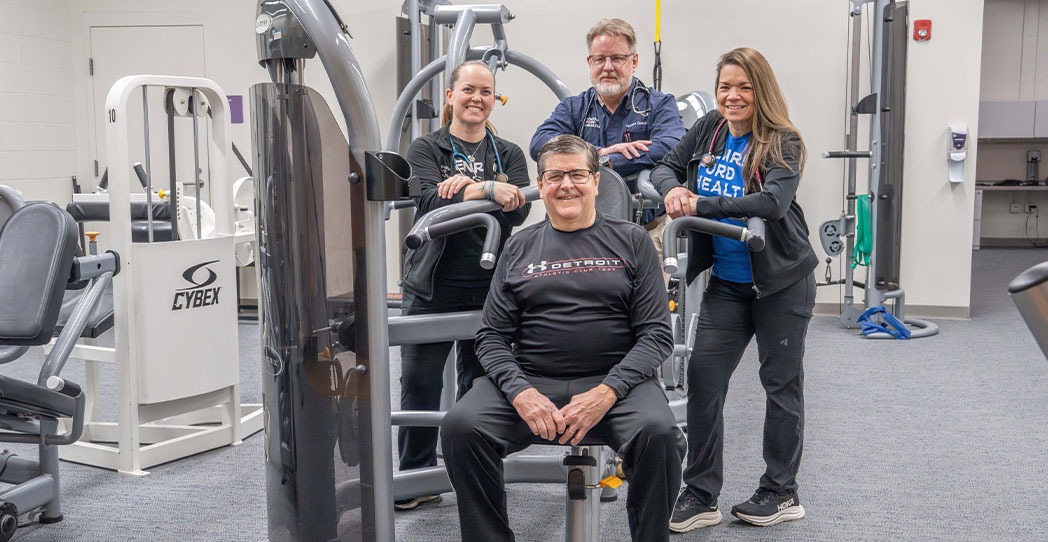
Physicians, clinical exercise physiologists, registered dietitians, registered nurses and behavioral health specialists work in cooperation with your doctor to provide structured education and individualized ECG (electrocardiograph) monitored exercise.
This program, designed for you, not only helps improve your heart and muscular function, but also reduces your risk of suffering another heart problem in the future. Patients recovering from heart problems typically attend three sessions per week for up to 12 weeks.
What to Expect from Your Cardiac Rehab Appointment
What kinds of rehab are available?
Here’s how your cardiac rehabilitation will proceed:
- Phase I cardiac rehabilitation begins in the hospital as you recover from your heart-related problems. You’ll receive information about nutrition, exercise and other aspects of a healthy recovery and perform moderate physical activities.
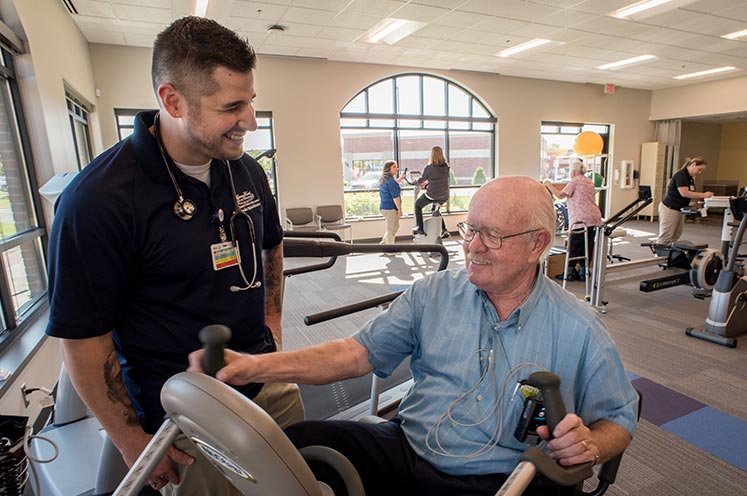
- Phase II cardiac rehabilitation provides outpatient education to improve your cardiac health and includes individualized ECG (electrocardiograph)-monitored and medically supervised exercise programs.
- Phase III cardiac rehabilitation, Henry Ford’s PREVENT program (prevention through exercise and education), establishes heart-healthy lifestyles for patients like you by combining medically supervised exercise with education for patients with all types of health concerns.
Medicare and Health Alliance Plan (HAP) usually cover between 80 and 100 percent of the program’s cost. Other health insurers may cover between 20 and 100 percent.
Show me
Henry Ford Health First in Michigan to Offer ‘Next Generation’ PET Imaging Agent for Heart Disease Detection
First JenaValve Heart Patient Continues Remarkable Recovery with Liver Transplant
Groundbreaking Global Trial Redefines Stroke Prevention for High-Risk Patients
Heart Monitors: How They Are Used To Understand Your Heart
Heart monitors are designed to gather data on your heart rate, rhythm, pauses and arrhythmias over longer periods of time so your doctor can get a better understanding of your heart health.
Do You Really Need 10,000 Steps A Day?
While the benchmark of 10,000 steps a day became the standard with fitness trackers, new research shows that 7,000 steps can help improve your overall health.
Can a Coronary Calcium Scan Save Your Life?
In just 15 minutes, a coronary calcium scan can give you a picture of the calcium plaque buildup in your heart. It can inspire lifestyle changes or trigger lifesaving interventions.
Does Flying Affect Your Heart?
Air travel is safe for most people, but it can cause some stress on the body. Learn how flying affects the heart and what you can do to protect yourself.