
While your fears of cyclosporiasis may have passed, this outbreak serves as a reminder that safe food prep and handling is always a great first line defense against foodborne illnesses.
Foodborne illnesses caused by bacteria, like salmonella and e. coli, or those caused by parasites, like cyclosporiasis, are transmitted by eating contaminated food and beverage products. However, it is important to note that while some of these illnesses spread because of contamination that occurs at the harvesting and processing level, foodborne illnesses are also a real threat to you and your family if you aren’t following proper steps to store or prep food safely at home. Here, Allegra Picano, RDN, a registered dietitian nutritionist at Henry Ford Health, shares tips for food prep safety and how to continue to eat produce during outbreaks of foodborne illnesses.
How To Wash Your Produce To Reduce Your Food Safety Risk
While thoroughly washing your vegetables and fruits and taking steps to properly store and prep food cannot eliminate your risk of foodborne illnesses completely, it can certainly help. Make sure to follow these steps before consuming:
1. Wash hands before and after.
This helps avoid the spread of bacteria, germs and parasites when handling raw foods.
2. Keep raw meat products away from fresh produce.
Cross contamination is one of the greatest causes of foodborne illnesses. Make sure that you are cleaning and sanitizing your countertops, regularly washing your hands and using separate knives and cutting boards for prepping meat and produce.
3. Remove outer leaves.
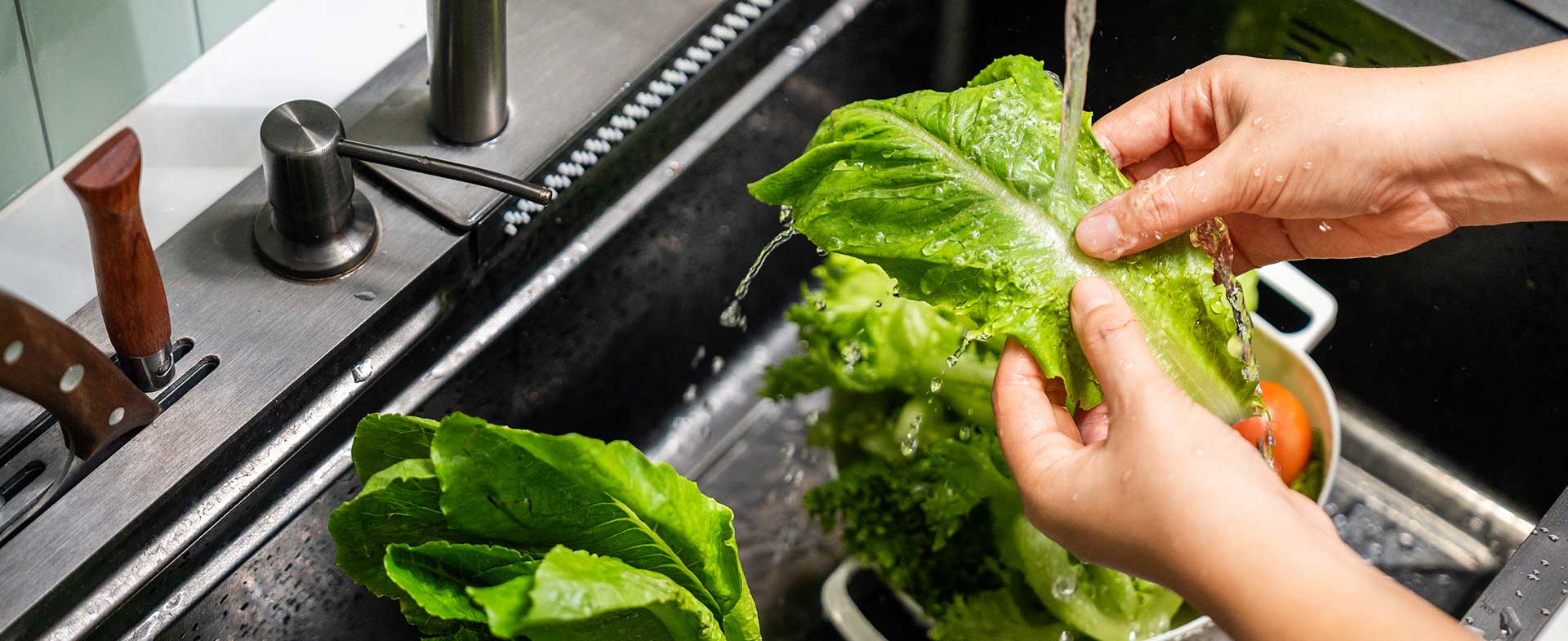
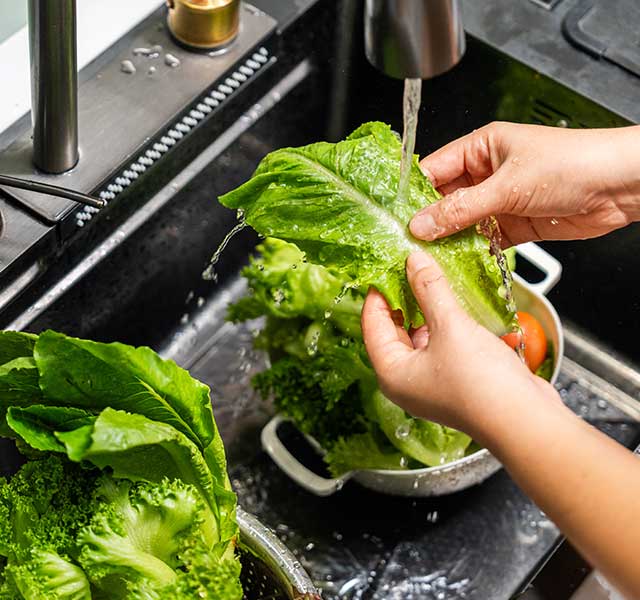
When it comes to washing cabbage, lettuce or other leafy greens, removing a few of the outer layers of leaves before washing can help reduce your parasite or bacteria exposure.
4. Scrub all produce well.
Running your food under water for a few seconds is not enough. For thicker skinned produce, scrub the surface diligently. Even items that are labeled as prewashed or tripled washed should be washed again at home.
5. Add vinegar.
Including a small amount of vinegar in the first wash of your vegetables and fruits can help loosen cyclospora that may be on the surface.
Best Practices for Eating Produce During Foodborne Illness Outbreaks

When outbreaks occur, keep up with organizations, such as the Centers for Disease Control and Prevention (CDC) or the Michigan Department of Health and Human Services (MDHHS), for authority regarding food and beverage recalls. If you’re struggling to choose produce while avoiding risk of illness, Picano offers up these suggestions:
- Opt for canned or commercially frozen vegetables and fruits instead of fresh.
- Buy whole, uncut produce over precut/prepackaged options sold at supermarkets.
- Peel vegetables and fruit before eating. While washing can remove some level of contaminants, removing the peel or outer layer of produce like apples, peaches, cucumbers and carrots can help decrease your exposure risk. Be sure to also cut away any damaged or bruised parts of your produce.
- Cook food thoroughly. Heating produce can kill off possible foodborne contaminants. You might consider making sauteed or roasted vegetables and fruit jams or pies with any possibly tainted produce.
- Shop your local farmer’s market. Fresh foods don’t need to be completely off the menu when foodborne illness outbreaks are active. Instead, look for them at your neighborhood farmer’s market. Since these products are grown locally, there may be less risk in consuming (as long as proper food prep practices are still involved).
Reviewed by Allegra Picano, RDN, a registered dietitian nutritionist at Henry Ford Health.

