
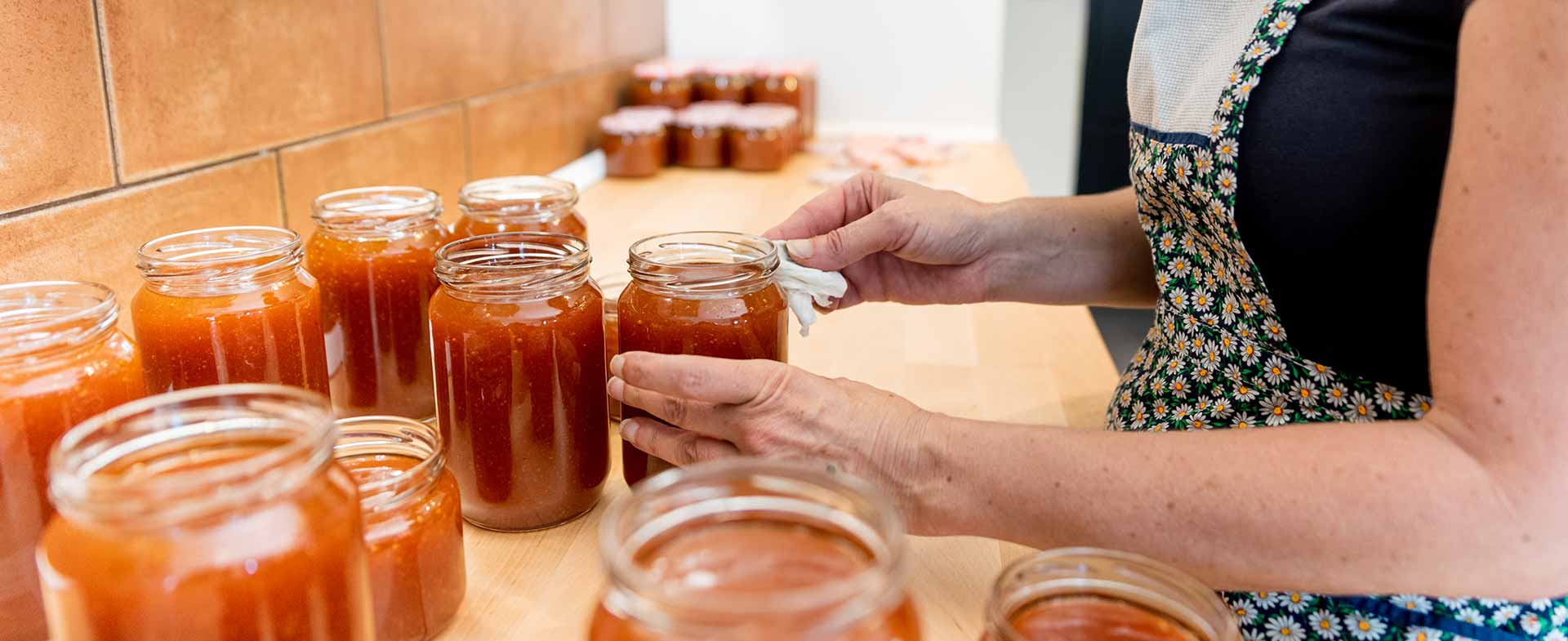
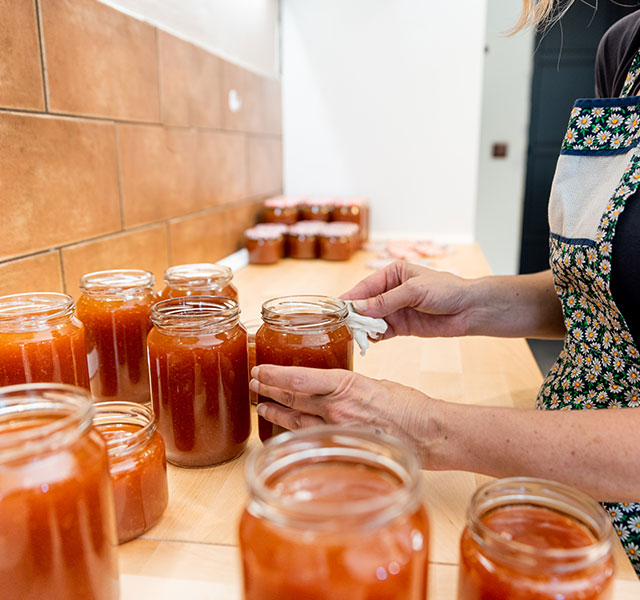
Summer is the perfect time to not only recharge your batteries, but also to stock up on those homegrown goodies from your backyard (or from your local farmers market)! The goal of canning and freezing all of the bounty that Mother Nature – and your green thumb – have created is simple: to ensure food safety and preserve quality so that you and your family can enjoy those vegetables and fruits all year long.
What To Know Before Preparing To Store Your Food
But how do you do that? There’s more to consider than you might think. Here’s a handy checklist to refer to when saving your summer harvest:
1. Know the difference between low acid and high acid foods.
This one’s a biggie. There’s a bacteria that can grow in food called Clostridium botulinum. It’s not only a mouthful to say but can be dangerous if it ends up in yours. These bacteria exist as spores and are harmless in the presence of oxygen. That all changes once the oxygen source is removed. In fact, in just a few days without oxygen, these spores multiply and produce Clostridium botulinum, leading to deadly botulism when eaten. To destroy the spores, you need very high temperatures and acid, so knowing the acidity level of your food is key. Before sealing your canning jars, use these tips:
- Low acid foods (foods with a pH of 4.6 to 14 on the alkalinity scale) must reach a temperature of 240 to 250 degrees Fahrenheit and stay there for a period of time (dependent on the type of food and how it is packed in the jars) to be safe. To reach this temperature, you must use a pressure cooker. Low acid foods include carrots, beans, potatoes, peas, corn, most meats, fish and shellfish.
- High acid foods (pH of 1 to 4.5) can be canned by bringing the jars to a boil (212 degrees Fahrenheit). The cooking time depends on many factors, including the size of the jar, the amount of food being processed, the amount of liquid in the jar and even the altitude you’re cooking in. High acid foods include most fruits, fruit juices and tomatoes.
2. Don’t take shortcuts.
Each step in the storing process is important from a food safety and quality perspective. Don’t skimp on cleaning, heating, peeling, etc.
3. Write it down.
Make sure all home-canned and frozen foods are labeled with the name of the food and date stored. Then follow the first-in-first-out rule: consuming them in the order you stored them. In general, unopened home canned foods are best in the first year and should be used before 2 years. Frozen food stored continuously at 0 degrees Fahrenheit is safe to eat indefinitely. But for best taste, enjoy within 3 months to a year.
4. Be freezer savvy.
When freezing foods, make sure there is enough room to let air circulate throughout your freezer. Avoid overfilling it to keep it from being overwhelmed. The length of time it takes to freeze food will affect the quality and taste of it. You may also want to dial down the temperature to -10 degrees Fahrenheit for 24 hours before freezing to help the process along. Don’t forget to return your freezer to its normal settings after your food is frozen.
Also, make sure that sealed cans and glass jars are never frozen. Freezing can cause cans to burst or seals to break - letting in harmful bacteria. Canned food should be stored in a cool, dark, dry space away from temperature changes.
5. Be selective.
Some foods/meals freeze better than others. Sour cream, custard and anything cream-based don’t freeze well. Fruit, meats, soups, burgers, rolls and muffins do.

6. Enjoy quickly.
Once thawed or opened, your frozen and canned goods don't have a very long shelf life. Follow these best practices for enjoying safely:
- For frozen foods, once thawed, use within 3-4 days.
- For canned low acid foods, store in the refrigerator once open and used within 3-4 days.
- For canned high acid foods, store in the refrigerator once opene and use within 5-7 days.
So now that you’ve checked everything off your list, plant, pick, can, freeze, prepare, serve and enjoy!
Bethany Thayer, MS, RDN, is the director of the Henry Ford Center for Health Promotion and Disease Prevention. Learn more about Bethany.

