
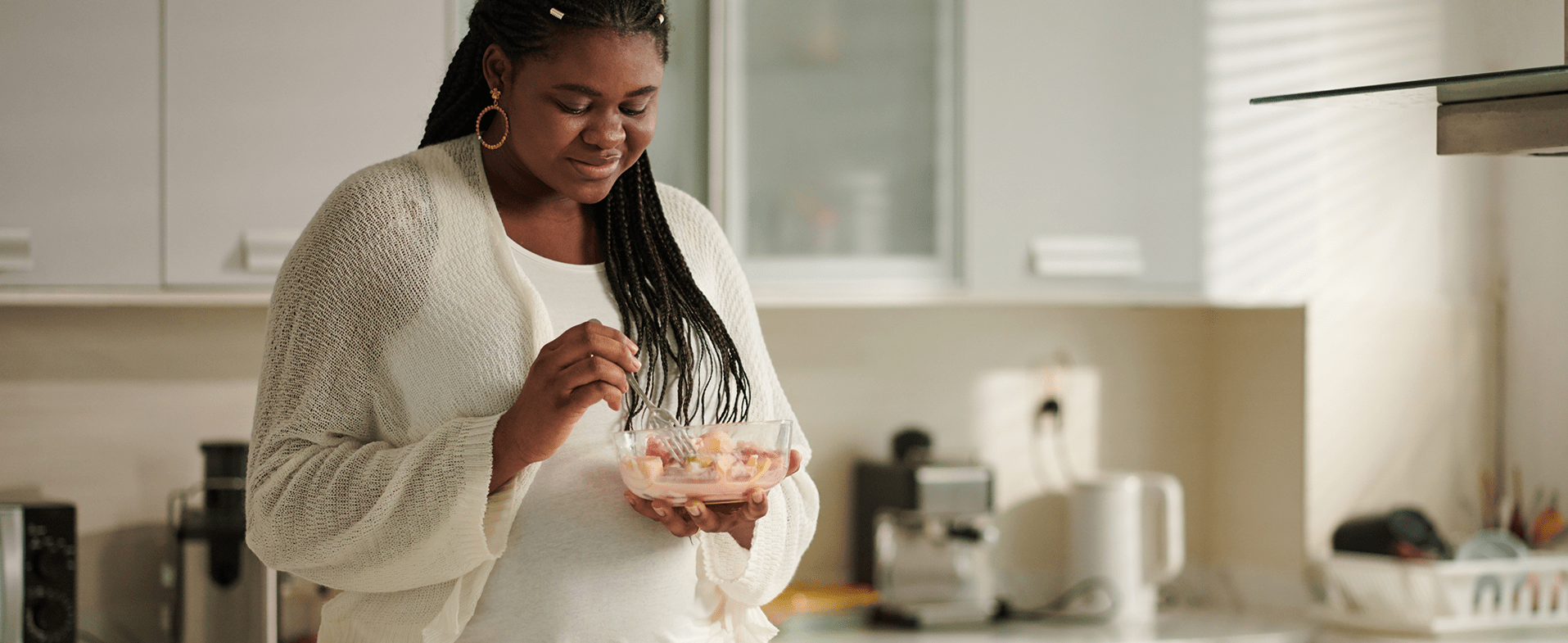
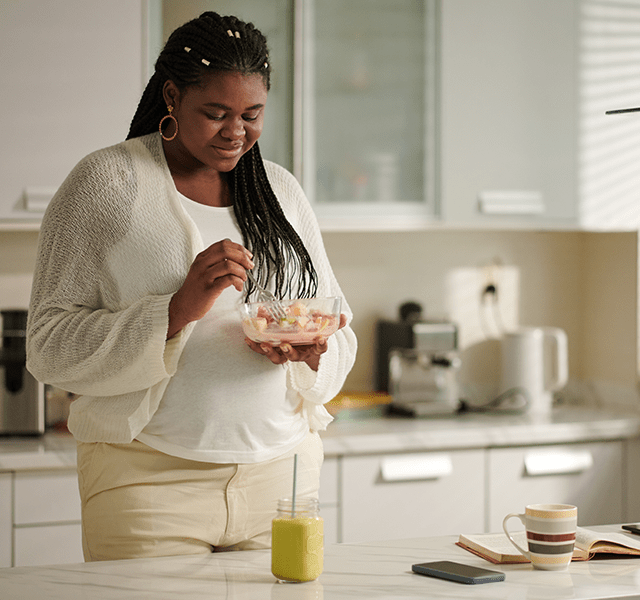
Eating well during and after pregnancy is key for keeping you and your baby healthy. But many moms-to-be don’t realize just how much their nutritional needs change.
“Most people underestimate the demand that pregnancy puts on a woman’s body,” says Ashlee Carnahan, MS, RD, supervisor of the Center for Health Promotion and Disease Prevention at Henry Ford Health. “It could be one of the highest demands your body goes through in your entire life.”
Learn how to fuel for that demanding season and for your recovery afterward.
How to Eat During Pregnancy
You don’t necessarily need to “eat for two” during pregnancy. In fact, your calorie needs don’t change until the second trimester, when you’ll need approximately 300 additional calories per day. During the third trimester, your needs increase by about another 400 calories per day. “That can easily be achieved with a larger snack,” Carnahan says.
To make those calories count, make sure your diet includes:
- Fruits and vegetables: Eat at least three cups of vegetables, including at least one cup of dark green or orange vegetables high in vitamin C, and at least two cups of fruit every day. Limit juice to one cup per day of 100% fruit juice. The fiber in fruits and vegetables can help pregnant moms stay regular, and the extra vitamins and minerals provide critical nutrients such as folic acid.
- Healthy fats: Prioritize sources of healthy fats whenever possible. Omega-3 fatty acids—DHA in particular—are a solid nutrition investment. “They’re really good for brain development,” Carnahan says. She suggests salmon, nuts, seeds and olive oil.
- Calcium: It’s especially crucial to get two to three servings of calcium-rich foods per day during pregnancy. “Otherwise, the baby could pull calcium stores from the mom,” Carnahan says. Great calcium sources include milk, sardines, green leafy vegetables, yogurt and fortified plant-based dairy products such as soy and almond milk.
- Iron: Your body uses iron to make extra blood that carries oxygen to your baby. That’s why your daily iron needs jump from 18 milligrams to 27 milligrams during pregnancy. Yet many women start pregnancy low in iron, and levels naturally drop as pregnancy progresses, Carnahan says. That can lead to anemia. To boost absorption, she suggests pairing an iron-rich food such as lean red meat, chicken, fortified cereals or fortified bread with a vitamin C source like strawberries.

Carnahan also stresses the importance of taking a prenatal vitamin as early in your pregnancy as possible, or even before a planned pregnancy. “A prenatal vitamin boosts your doses of vitamins and minerals more than a standard women’s multivitamin and tailors specific nutrient needs related to pregnancy,” she says. Most importantly, it supplies folic acid (vitamin B9), which helps your body make new cells and can help prevent serious birth defects.
Foods to Limit or Avoid During Pregnancy
A healthy pregnancy involves more than eating nutritious foods—it’s also about avoiding foods that pose risks to you and your baby, including:
- Choose low-mercury fish: Fish carries a risk of mercury contamination. The FDA recommends two to three servings of low-mercury fish (such as anchovies, cod and salmon) per week during pregnancy. Avoid fish that tend to be higher in mercury, such as king mackerel, shark and swordfish, Carnahan says.
- Heat lunch meat: Lunch meats can carry harmful bacteria called listeria. And pregnancy raises your risk of foodborne illness. Carnahan recommends cooking lunch meat before you eat it. Or skip it and grill a piece of chicken for your sandwich instead, she suggests.
- Avoid raw seafood and unpasteurized dairy: Raw seafood and unpasteurized dairy can contain harmful germs that can increase your risk of foodborne illnesses. Don’t eat uncooked seafood like sushi or ceviche. Also, check the label of your dairy products for the word “pasteurized.” This means the food has been heated to kill harmful bacteria and other germs that can cause illness.
Postpartum Nutrition: Eating After Delivery
Eating to recover after childbirth calls for the same nutrients you prioritized during pregnancy. If you’re breastfeeding, it’s especially important not to restrict your food intake. “You need 300 to 400 additional calories a day when lactating,” Carnahan says.
With little sleep and a newborn to care for, cooking balanced meals can feel out of reach. Instead, Carnahan recommends keeping nutrient-dense, grab-and-go foods on hand, such as:
- Apple slices with peanut butter
- Boiled eggs
- Crackers with hummus
- Pre-made smoothies
- Pre-portioned packets of nuts and seeds
- String cheese
She also suggests working with a registered dietitian who can help you navigate your changing needs during pregnancy and postpartum. “As a registered dietitian nutritionist, I encourage parents to think about nutrition before, during and after pregnancy,” Carnahan says. “Whether you’re planning to conceive, expecting a baby or adjusting to life postpartum, good nutrition can support both your health and your baby’s development every step of the way.”
Reviewed by Ashlee Carnahan, MS, RD, a registered dietitian nutritionist who is the supervisor of the Center for Health Promotion and Disease Prevention at Henry Ford Health.

