

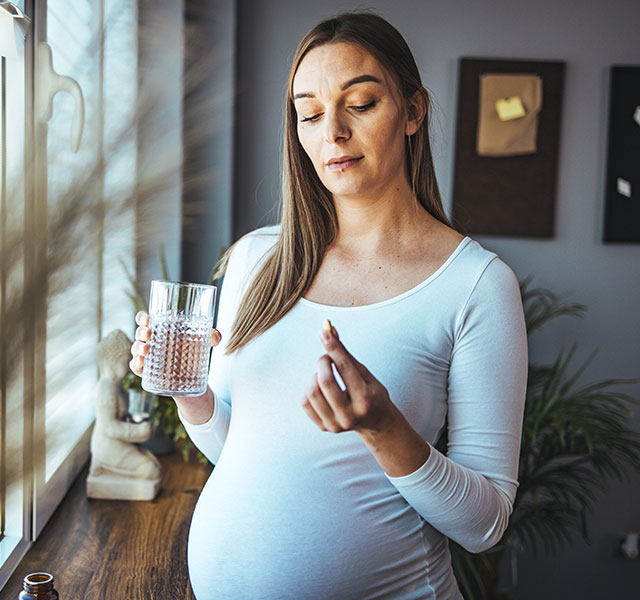
Preeclampsia is a relatively common condition that affects thousands of pregnant women every year. Yet for many people at high risk, research shows that taking daily low-dose aspirin can help prevent this serious condition.
Although low-dose aspirin is recommended for many pregnant patients, it isn't suitable for everyone. "Contraindications are rare, but before starting low-dose aspirin, patients should talk with their doctor or midwife to make sure it's the right choice for them," says Raminder Khangura, M.D., a maternal-fetal medicine specialist at Henry Ford Health. Dr. Khangura explains who should consider taking daily aspirin and how it can help.
Preventing Preeclampsia
Preeclampsia develops in about 8% of pregnant women. It’s a serious condition that can pose significant risks to a pregnant woman and her baby. “Preeclampsia causes high blood pressure—even in patients who haven’t had it before—and can affect multiple organ systems, including the liver and kidneys,” Dr. Khangura explains.
Once it develops, the only treatment is to deliver the baby. But that, too, can lead to serious consequences if the baby is born prematurely. “Given the threats posed by preeclampsia, our goal is to do whatever we can to reduce the risk of developing it in the first place—and that’s where aspirin comes in,” she says.
Taking daily low-dose aspirin can reduce the risk of preeclampsia by 15% to 20% in women at high risk, Dr. Khangura adds. And new research presented at the Society for Maternal-Fetal Medicine 2026 Pregnancy Meeting found that patients who took daily aspirin had a 29% lower risk of severe preeclampsia compared to women who did not take aspirin.
Aspirin During Pregnancy: Who, When and How Much
Experts usually advise patients at risk of preeclampsia to take aspirin starting at 12 weeks of pregnancy, until the baby is born. The American College of Obstetricians and Gynecologists (ACOG) recommends the treatment for women with one or more high-risk factors:
- Autoimmune diseases such as lupus or antiphospholipid syndrome
- Chronic high blood pressure
- History of preeclampsia in a previous pregnancy
- Kidney disease
- Twins or multiples
- Type 1 or type 2 diabetes
The guidelines also suggest patients and their doctors should consider low-dose aspirin if they have two or more moderate-risk factors for preeclampsia, including:
- Age over 35
- Black race
- BMI over 30
- Low socioeconomic status
- Mother or sister who had preeclampsia
- Never gave birth or carried a pregnancy past 20 weeks
- Personal factors such as low birthweight or a history of problems in pregnancy
What counts as low dose? Experts in the United States have typically recommended high-risk patients take one baby aspirin a day, equal to 81 milligrams (mg). But recent studies in Europe found that a higher dose is even more effective, while still being safe. As a result, many health systems across the U.S.—including Henry Ford Health—have recently started suggesting high-risk patients take two baby aspirin, or 162 mg, each day.

“We’ve seen that higher dose does more to prevent preeclampsia without increasing the risk to the mother or the baby,” Dr. Khangura says. “Of course, it’s important to talk to your doctor or midwife before deciding whether to take aspirin and which dose is best.”
Can Anyone Take Low-Dose Aspirin During Pregnancy?
Daily low-dose aspirin is safe for most pregnant women, but you might be advised to steer clear if you have an allergy to aspirin or other non-steroidal anti-inflammatory drugs (NSAIDs) like ibuprofen or naproxen, Dr. Khangura says.
Some women, such as those who have inflammatory bowel disease or who have had bariatric surgery, might have been told to avoid NSAIDs like aspirin. But a high-risk pregnancy can change that equation.
“The benefits might outweigh the risks for these patients, so it’s important to discuss with your care team if you’re at high risk of preeclampsia,” Dr. Khangura says. “Sometimes it becomes a multidisciplinary discussion to see if aspirin is a possibility and at what dose.”
Low-dose aspirin doesn’t typically cause side effects, but you should tell your doctor or midwife if you notice any new symptoms during pregnancy. Now that low-dose aspirin has become routine for people at high risk of preeclampsia, most OB-GYNs and midwives can guide the treatment, but maternal-fetal medicine specialists can step in for more high-risk pregnancies.
Low-dose aspirin doesn’t always prevent preeclampsia. For many patients, though, it can be an affordable and effective way to increase the chance of a healthy pregnancy.
Reviewed by Raminder Khangura, M.D., an OB/GYN and a maternal-fetal medicine specialist who sees patients at Henry Ford West Bloomfield Hospital and Henry Ford Medical Centers - Ford Road and New Center One.

