

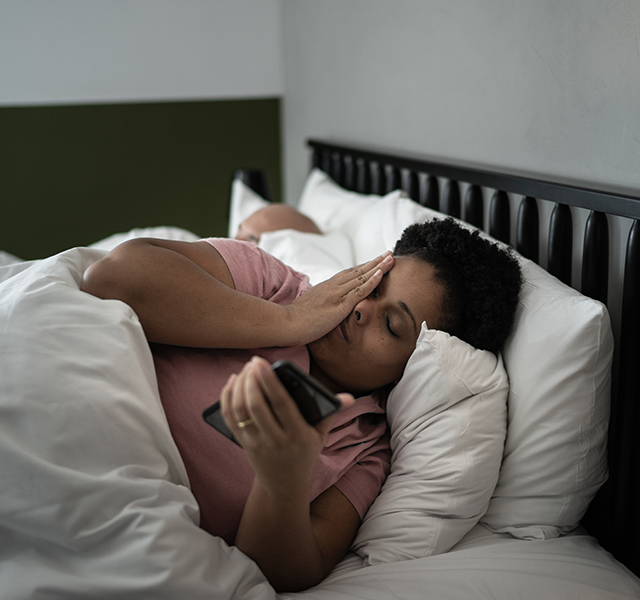
When you have allergies, going to bed can feel like facing a battle. As soon as your head hits the pillow, your nose becomes hopelessly plugged.
“There’s a huge overlap between allergies—especially nasal symptoms—and sleep problems,” says Andrea Plawecki, M.D., an otolaryngologist and sleep medicine specialist at Henry Ford Health.
Dr. Plawecki explains why nighttime isn’t always the best time for breathing easy—and what you can do to get a good night’s sleep during allergy season.
Why You Have a Stuffed-Up Nose at Night
Humans are built to breathe through their noses, Dr. Plawecki explains. “Breathing through the nose affects sleep in more ways than most people realize,” she says. Your nose humidifies and filters the air, trapping particles like allergens or viruses. And that’s just for starters.
“There are chemicals produced in the nose and sinuses that enhance oxygen delivery into our lungs. There are also receptors in the back of the nose that help to keep our throat muscles open when we sleep,” she says. “Not breathing easily through your nose at night can have a lot of downstream effects on your sleep.”

ENT Care at Henry Ford
Unfortunately, nighttime is often precisely when our nose breathing lets us down. “It’s common to feel fine during the day but then experience more noticeable symptoms at night,” she says.
Part of that is basic biology. When we lie down, blood vessels naturally dilate, making the nose feel stuffy. Inside the nose is a set of structures known as nasal turbinates. “The job of those structures is to filter and humidify the air we breathe,” Dr. Plawecki explains.
The turbinates operate in a kind of back-and-forth cycle. The blood vessels in one side swell while the others shrink, then they swap. That cycle is less noticeable during the day but becomes more pronounced at night. “That’s why one side of the nose may feel more plugged up when you lie down to go to sleep,” she adds.
Nighttime Allergy Relief
Thanks to that combination of factors, some congestion is normal during the night. “But adding in allergies on top of that can really affect your sleep quality,” Dr. Plawecki says.
That doesn’t mean you have to settle for tossing and turning during ragweed season. Dr. Plawecki shares her advice for sleeping well with seasonal allergies:
- Banish allergens: To keep allergens at bay, keep windows closed. Dust and vacuum regularly to remove pollen and other allergy triggers. You might also consider running an air purifier to collect airborne allergens.
- Treat your sheets: Feel like you’re allergic to your bed? It’s not as far-fetched as it sounds. Many people are allergic to dust mites—microscopic creatures that camp out in bedding, carpets and furniture. Consider using allergy-barrier covers on your pillows and mattress, and wash bedding often and in hot water. Go with gravity: It’s low-tech but useful—propping your head up with an extra pillow can help improve nasal congestion, Dr. Plawecki says.
- Try medications: Steroid nasal sprays like fluticasone are the go-to pick for reducing inflammation in the nose, making it easier to breathe. “These medications can be helpful for people with congestion, whether it’s caused by allergies or a cold,” Dr. Plawecki says. Other over-the-counter options include antihistamine nasal sprays, which target nasal allergy symptoms, and oral allergy medications, which are helpful if you’re also experiencing symptoms like itchy eyes or skin. And if you’re tired of managing seasonal allergies, allergy shots might help.
- Rinse and repeat: Using neti pots or saline rinses regularly helps keep the nose moist and can also flush out pollen and other allergens. “Sinus rinses can be a big help during allergy season to clear things out,” she says.
- Get diagnosed: Allergies are common, but they aren’t always the whole story. Anatomic issues like nasal polyps, enlarged turbinates or a deviated septum can also contribute to nighttime breathing difficulties. “We can treat those types of structural problems with surgery, and we also have several nonsurgical procedures that work really well,” Dr. Plawecki says.
Your primary care doctor can help decide if you should see an allergist or an ENT—and often, those experts work together to address breathing problems, Dr. Plawecki says. “If allergies or congestion are affecting your sleep quality, that’s reason enough to talk to your doctor.”
Reviewed by Andrea Plawecki, M.D., an otolaryngologist and sleep medicine specialist who sees patients at Henry Ford Medical Center - Brownstown, Fairlane, New Center One, Plymouth and Templin.

