
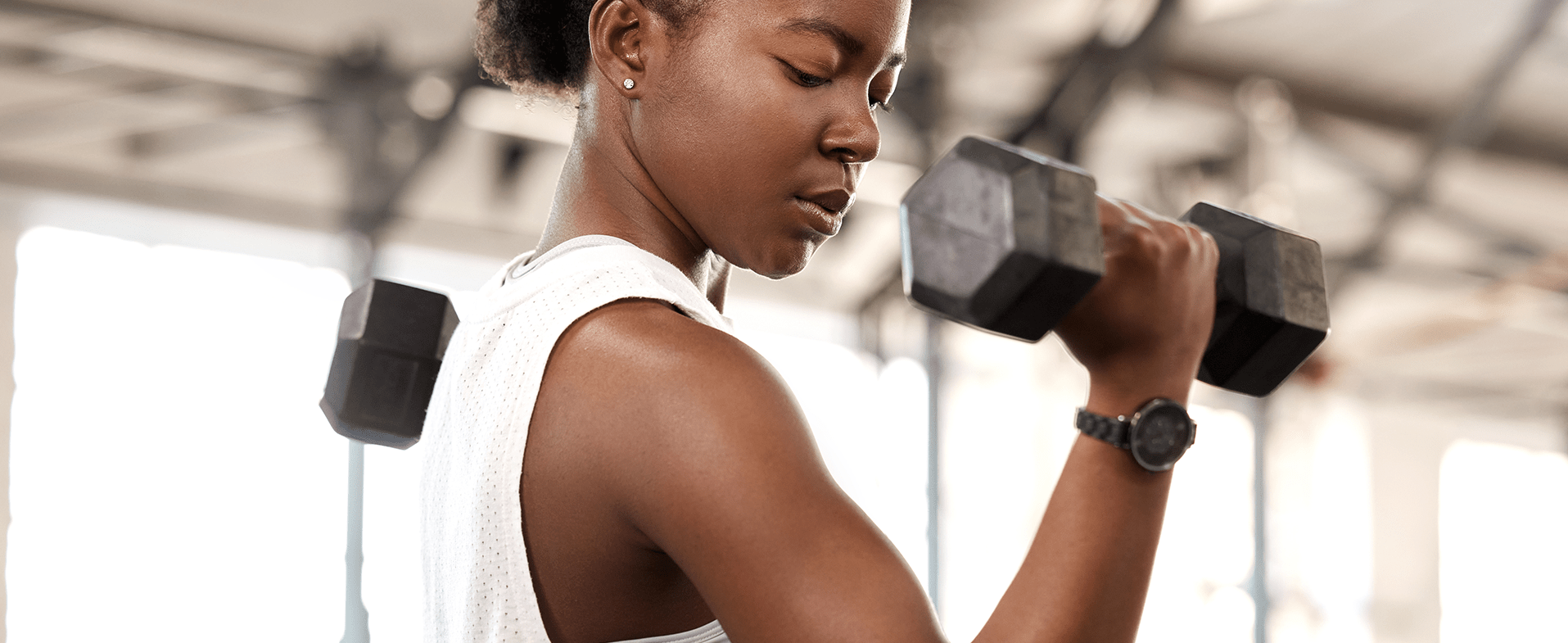
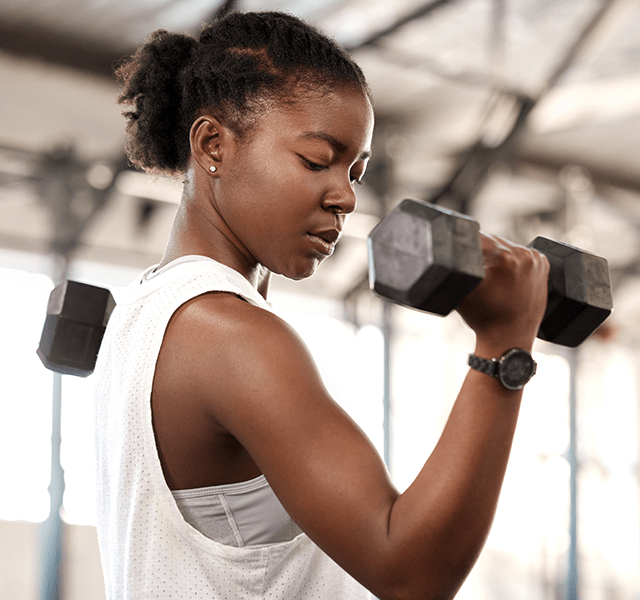
At most gyms, you’ll likely spot at least a few different workout stereotypes. There’s the grunting guy proudly tossing around dumbbells the size of a small car. You might also see a petite woman carefully doing a multitude of reps with a tiny, 3-pound weight.
One of those gym-goers believes only the heaviest weights are worth lifting. The other might worry that lifting anything heavier than a bag of sugar will create overly bulky muscles.
“Both of these approaches can be helpful, and which to choose depends on what your overall goal is,” says Jenny Burnham, a certified athletic trainer at Henry Ford. “You might even want to try a combination of both approaches.”
When it comes to which is better—heavy weights or high reps—there really isn’t one right answer.
The Importance of Lifting Weights
Whether you choose to burn out your muscles with heavy weights or exhaust them with multiple reps, the good news is that you’re lifting weights. Strength training is often overlooked by people focused on building aerobic endurance or burning calories. But there are many good reasons to add strength work to your weekly exercise schedule.
The benefits of lifting weights include:
- Boosting bone density
- Improving balance to prevent falls
- Increasing functional movement (more muscle strength makes everyday activities easier)
- Maintaining lean muscle mass (which naturally decreases with age)
- Protecting joints by strengthening the muscles around them
What Lifting Heavy Weights Does for Your Muscles
“Lifting heavy weights helps you increase strength and can be a faster way to build muscle mass,” says Burnham. And because you do fewer reps when you lift heavier weights, it can make your workouts faster, too.
To determine how heavy you can go, Burnham suggests doing a one rep max test. “Start with a weight that you can do five reps with,” she says. “Then keep adding weight until you can only do one rep. That’s your 100% max.”
For your heavy weight workouts, you’ll want to pick a weight that’s about 70% to 80% of your one rep max for each exercise. For example, if your one rep max for a bench press is 100 pounds, you’ll want to use 70 to 80 pounds during your workout.

Go Where The Pros Go
When using heavy weights, you’ll do fewer reps. For each exercise, that might mean four sets of just four to five reps each. “The higher resistance of the heavier weight fatigues and breaks down your muscles faster,” says Burnham. “And that’s why that type of workout can result in faster strength gains.”
The Benefits of Doing High Reps With Lighter Weights
“Doing lots of reps using lighter weights is best for maintaining your strength, improving muscle tone and boosting general fitness and muscle endurance,” says Burnham.
She recommends this approach for athletes during their season to help maintain strength. It’s also appropriate for someone newer to exercise or recovering from injury. “If you’re still learning how to lift and working on proper form, you’re less likely to get injured if you lift lighter weights,” she says.
A lighter weight/higher rep workout might mean doing three sets of 15 to 20 reps for each exercise.
Heavy Weights, Low Reps and Light Weights, High Reps Are Both Effective
Even if your goal is to do workouts using heavy weights for fewer reps, it’s important to start off slowly. “When you go too heavy, too fast, you increase your risk of injury,” says Burnham. “As you get stronger, you can start increasing weight and decreasing the number of reps.”
You can also mix up your workouts. As you begin to build strength, try some exercises with a heavier weight and do fewer reps. Next workout, you might do the opposite for that same move.
“Either approach can be used to exhaust the muscle,” says Burnham. “And that helps build more strength.”
Whichever You Choose, Don’t Go It Alone
If you are new to lifting weights, it’s important to seek some expert advice. Using improper form or lifting more than you should can result in injury. “Working with someone in person—even for just a session or two—can help you create a safe and effective program,” says Burnham.
Doing a group class or session led by a trainer can also be helpful. You not only get instruction, but also the camaraderie of working out with a group.
Burnham warns against getting your guidance from AI or following along with an influencer’s TikTok workout. “They don’t always show proper form and can’t assess your strengths and weaknesses to keep you safe,” she adds.
As you progress toward lifting heavy weights—and especially as you test to find your one rep max—it’s important to work with a partner. “You’ll need someone spotting you in case you get to a point you can no longer lift the weight on your own,” says Burnham.
Incorporating a strength training workout of any kind into your exercise routine is important. Aim for two to three sessions per week, increasing the difficulty as you build strength.
Reviewed by Jenny Burnham, MS, AT, ATC, CSCS, a certified athletic trainer at the Henry Ford Center for Athletic Medicine — Detroit.

