
If you’re trying to lower your low-density lipoprotein (LDL) cholesterol, simply eating the right breakfast could be a winning strategy. Many common breakfast foods are rich in the nutrients you need for healthy cholesterol levels. Halle Saperstein, RD, a clinical dietitian at Henry Ford Health, explains how breakfast can help with cholesterol and how to fit breakfast into your life.
Why Soluble Fiber Is Good for Cholesterol
LDL cholesterol, often called “bad” cholesterol, can build up in your arteries and increase your risk of heart attack and stroke. In some cases, medication may be necessary to manage it. But what you eat is also important—especially soluble fiber.
“Soluble fiber binds to cholesterol and bile acids in your digestive tract,” Saperstein explains. “When that happens, your body has to pull cholesterol from your bloodstream to make more bile acids. This helps to digest fat, which in turn helps to lower your LDL cholesterol.”
The goal is to get 5 to 10 grams of soluble fiber daily, with a total fiber intake of 25 to 30 grams per day. Foods like oats, barley, beans, lentils, apples and citrus fruits are all excellent sources. And breakfast is the perfect time to load up on these cholesterol-fighting foods.
If you’re not used to eating a lot of fiber, start slowly. “Increasing fiber too quickly can cause bloating and digestive discomfort,” Saperstein warns. “Add a little more each week and drink plenty of water to help your body adjust.”
The Importance of Heart-Healthy Fats
The right fats are also helpful if you’re trying to lower your LDL. Saturated fats, which are found in butter, coconut oil and many processed foods, can raise LDL cholesterol. Trans fats, often listed as “partially hydrogenated oils,” are even worse.
“Replace saturated fats with unsaturated fats whenever you can,” Saperstein advises. “Use olive oil instead of butter, snack on nuts instead of chips, and add avocado to your meals. These swaps can make a real difference.” She also recommends incorporating whole soy foods like tofu or edamame, which contain compounds that may help lower cholesterol.

Easy Breakfast Ideas to Lower LDL
You don’t need complicated recipes or a lot of time to build a cholesterol-lowering breakfast. Meal prepping can also make heart-healthy breakfasts more realistic on busy mornings. Cook a big batch of oatmeal, bake egg muffins or portion out yogurt bowls in advance. And consistency matters more than perfection. “Even if you can only manage a few of these breakfasts each week, that’s still progress,” says Saperstein.
Here are some simple, practical ideas that pack in soluble fiber and heart-healthy fats:
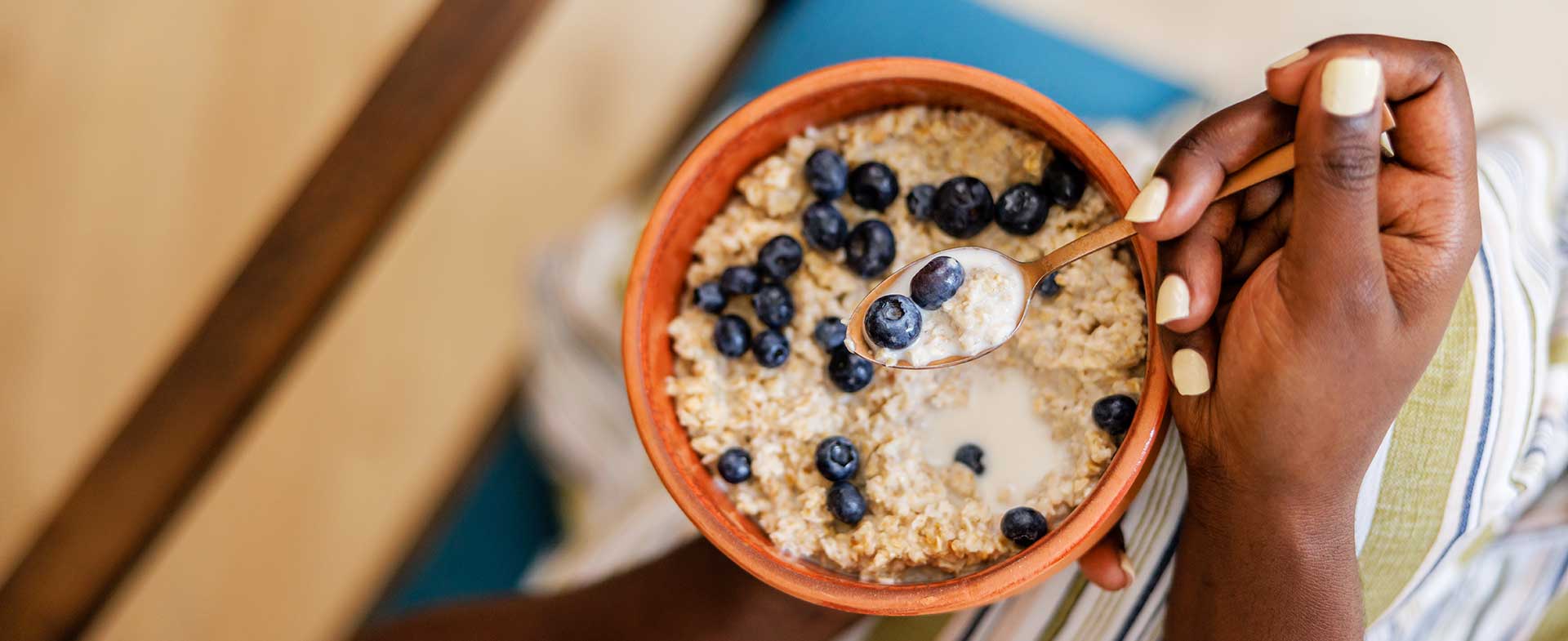
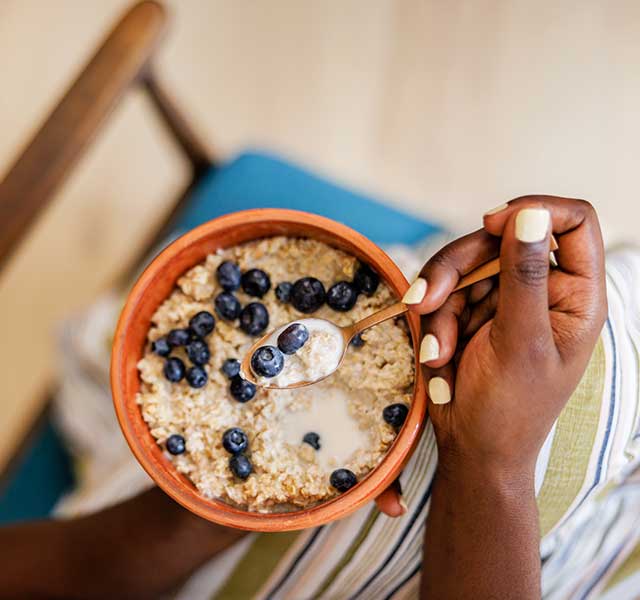
- Oatmeal with seeds and berries: “Oatmeal is one of the best sources of soluble fiber,” says Saperstein. “Top it with ground flaxseed or chia seeds for even more fiber, plus some berries for antioxidants and natural sweetness.” A bowl of cooked oatmeal provides about 2 grams of soluble fiber and adding a tablespoon of ground flaxseed boosts that by another gram.
- Greek yogurt bowl with nuts and high-fiber cereal: Choose plain, unsweetened Greek yogurt and add your own toppings. Try a handful of almonds or walnuts, a sprinkle of high-fiber cereal (look for at least 5 grams of fiber per serving) and fresh fruit. “Nuts provide healthy fats that support heart health,” Saperstein says.
- Avocado toast on sprouted grain bread: Swap regular bread for sprouted grain or whole-grain varieties, which contain more fiber. Top with mashed avocado, a sprinkle of chia seeds and a poached egg if you’d like some protein. “Avocados are rich in monounsaturated fats, which can help improve your cholesterol profile,” says Saperstein.
- Smoothie with greens, seeds and fruit: Blend spinach or kale with frozen berries, a tablespoon of chia seeds, a scoop of protein powder and unsweetened almond milk. “Smoothies are a great way to pack in fiber and nutrients when you’re short on time,” Saperstein says. “Just watch out for added sugars. Stick with whole fruits, dark green leafy veggies and unsweetened liquids whenever possible.”
- Make-ahead egg bites with vegetables: Bake a batch of egg muffins with spinach, tomatoes and bell peppers on the weekend and pop them in the freezer. Then you can reheat them throughout the week. Pair with a slice of whole-grain toast and some sliced apple with almond butter for a balanced, fiber-rich meal.
Don’t Skip Medications
Breakfast is just one piece of the puzzle when it comes to managing high cholesterol. Medication, regular exercise and working closely with your doctor are all essential.
“A healthy diet is an effective way to support your treatment plan and help you get the best results,” Saperstein says. “It can also improve your overall health. But even the best diet can’t replace medication, so keep taking all of your medications as directed unless your provider tells you otherwise.”
Time for Breakfast Is Time Well Spent
Making small changes to your morning routine can help you take steps toward better heart health. "Most people make breakfast at home, which allows us to be more intentional about what we eat,” Saperstein says. “Try not to skip breakfast, because you’re missing an opportunity to fit in some heart-healthy foods before the day gets busy. Those few minutes in the morning can help you set the tone for a day of healthy choices.”
Reviewed by Halle Saperstein, RD, a clinical dietitian at Henry Ford Health.

