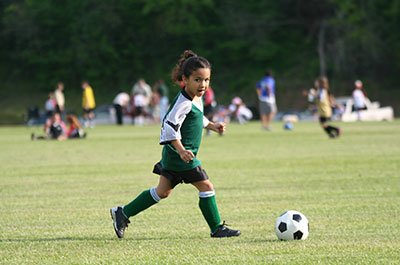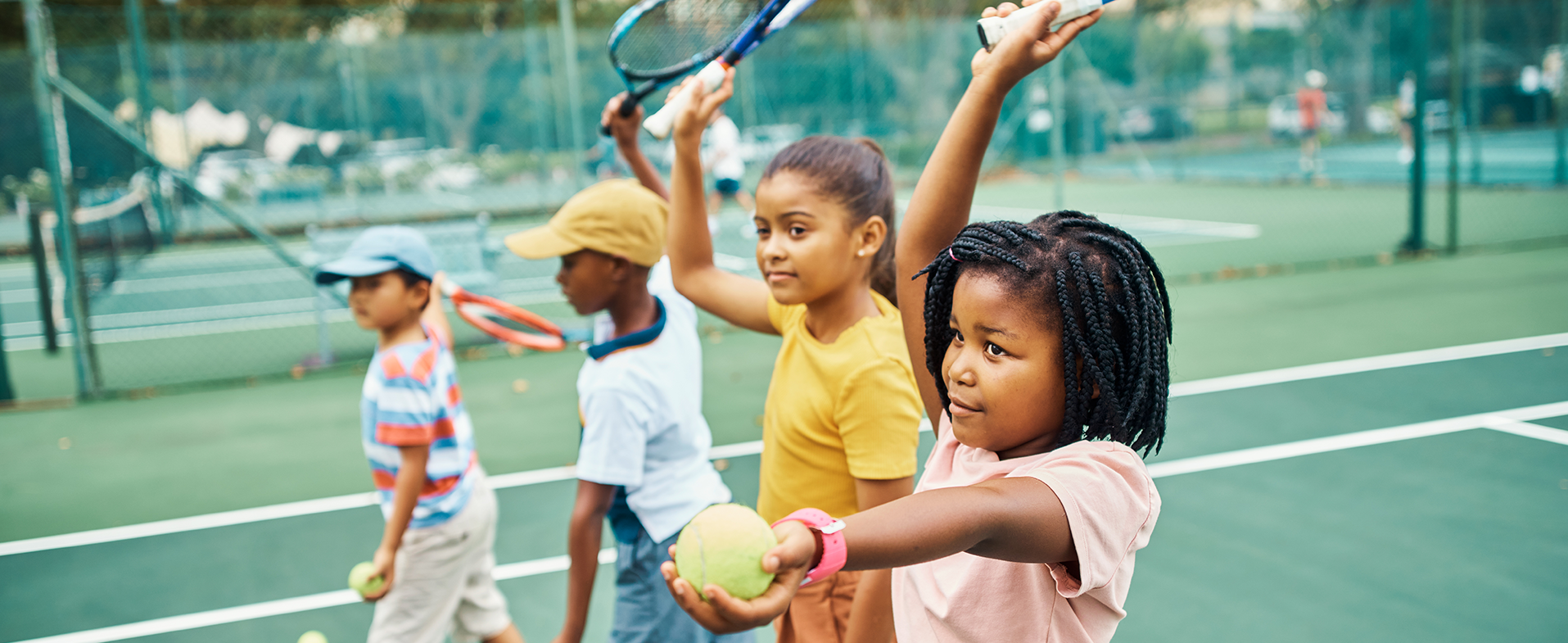

Playing sports as a child has so many mental and physical health benefits, from exercising and getting outside to honing new skills and learning to work as a team. And you don’t have to wait – you can start them young.
“I think you can get your child involved in sports as early as age three,” says Timothy Dekker, M.D., a sports and family medicine physician at Henry Ford Health. “It will get them comfortable being in an environment where they have coaches and they’re playing with other kids. You definitely don’t want to focus on how they’re actually performing or whether they’re winning – you want them to develop a positive association toward sports so keep it light and fun.”
Helping Your Child Develop a Positive Relationship with Sports
Here, Dr. Dekker shares how to help your children make the most of playing sports during their childhood.
1. Expose them to different sports.
Kids often have no idea what they actually like until they start playing a sport. (Same goes for adults!) Before signing them up for a league, get outside in the backyard and play T-ball or soccer. Or head to your local park to hit some tennis balls. Of course, if they express interest in playing a certain sport, let them try it and see if they like it.
2. Don’t stereotype them into a certain type of sport.
Sometimes parents think certain sports are better suited to their kids based upon their personality. (If they’re shy, for example, parents might sign them up for individual sports versus team sports. Or if they’re less active, they’ll sign them up for a slower-paced sport.) But letting them try a variety of sports throughout the seasons can help different facets of their personality blossom and help them develop new skills.
“Trying a new activity – even if it’s not in their ‘wheelhouse’ – is so good for building character, problem solving and just helping children navigate situations throughout life,” says Dr. Dekker. “They may end up loving the sport you think they might not like, regardless of whether they are ‘good’ at it.”
3. Get them excited about playing sports.
If your child doesn’t want to play any sport, take them to pick out their new athletic uniform or equipment. “Show them their new soccer uniform or let them choose a new baseball mitt or shoes to play basketball in,” says Dr. Dekker. “Kids get really excited about getting new things and this can help them get excited about playing a sport, too.”

Go Where The Pros Go
4. Have them play different sports throughout the year.
Until they’re in high school or college, specializing in one sport year-round can be physically and mentally harmful to your child. Mounting pressures from a coach or teammates, for example, can lead to unnecessary stress. And making the same movements with the same muscles can lead to overuse injuries – especially for growing bodies.
“I also think that as a kid, building general athleticism, hand-eye coordination and speed is way more valuable than trying to build specific skills,” adds Dr. Dekker.
5. Take advantage of developmental stages called speed bursts.
“Children go through periods of growth that are prime for them to develop certain athletic traits,” says Dr. Dekker. “If they aren’t exposed to sports during those windows, they’re somewhat capped in their future athletic ability.”
These periods of time are roughly from ages six to eight and 11 to 14. Note: You shouldn’t have your child train hard during these periods of time – just as long as they’re active in a sport. (It should still just be fun for them!)
6. Have conversations with them about disappointment in sports.
Sometimes you miss a goal, sometimes you lose. “Playing sports teaches you how to fail in life,” says Dr. Dekker. “You’re not going to get all of the jobs you want or get into all of the schools you want. Losing in sports helps you learn how to respond to disappointments throughout life.”
If your child is having a tough time after losing a game, have an open, honest conversation with them. “You can admit that it’s not fun to lose and it’s okay to be upset,” says Dr. Dekker. “You can tell them it’s great they care so much. But how can they turn it into something good? What can they learn from this experience that maybe they could do differently next time? How can they let losing motivate them in the future? It can be both a comforting moment and a teaching moment.”
7. Make sure they follow through with the season.
If your child decides halfway through the season they don’t want to continue, tell them why it’s important not to quit. “This teaches your kids they have to see things through even when they get tough,” says Dr. Dekker. “You can tell them they can choose a different sport next season, but they can’t let their current teammates down. This is just another one of the many lessons you learn in sports that help get you through life.”
Reviewed by Timothy Dekker, M.D., a sports and family medicine physician who sees patients at Henry Ford Orthopedics – Stonebridge and Henry Ford Orthopedics – West University.