If you are coping with snoring and sleep apnea—or if you share a bed with someone who is—you know what a sleep-wrecker it can be. So it’s no surprise that the internet and social media are abuzz with tales of people claiming to find relief from the simplest of fixes: A new pillow.
Sleep apnea pillows are having a moment, but experts warn they’re unlikely to solve all your nighttime breathing issues. “Treating sleep apnea often involves multiple treatment modalities,” says Andrea Plawecki, M.D., a sleep medicine specialist at Henry Ford Health. “A pillow won’t be the one thing that treats you, but it may be helpful on top of other therapies.”
What Is Sleep Apnea?
Sleep apnea occurs when there are pauses in breathing or periods of shallow breathing during sleep. The most common type is called obstructive sleep apnea (OSA).
People with OSA experience pauses in breathing because something temporarily obstructs their airway. “Typically, there’s some collapse of the muscles and structures in the throat and tongue,” explains Dr. Plawecki. “The pauses in breathing arouse you from deeper sleep stages and lead to more fragmented, less restful sleep.”
Some of the factors that can increase your risk of sleep apnea include:
- Alcohol use
- Enlarged tonsils
- Family history of sleep disorders
- Menopausal hormonal changes
- Obesity
- Smoking
How Positioning with a Sleep Apnea Pillow Can Help
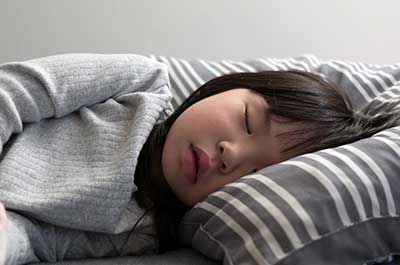
“For some people, the positioning of the body during sleep does play a role in sleep apnea and snoring,” says Dr. Plawecki. “People often report that symptoms are worse when they sleep on their back versus their side.”

Managing Sleep Apnea
So-called antisnoring pillows are the modern equivalent of sewing tennis balls into the back of your pajamas. “Some sleep positioning pillows will encourage you to stay asleep on your side and not roll onto your back, where snoring and breathing issues can be worse,” says Dr. Plawecki.
Other types of sleep apnea pillows aim to hold your neck and head in a more neutral position so that your airway can stay open. “Depending on the design, they may extend the neck a little or help keep the chin from falling forward and keep the mouth closed,” she says.
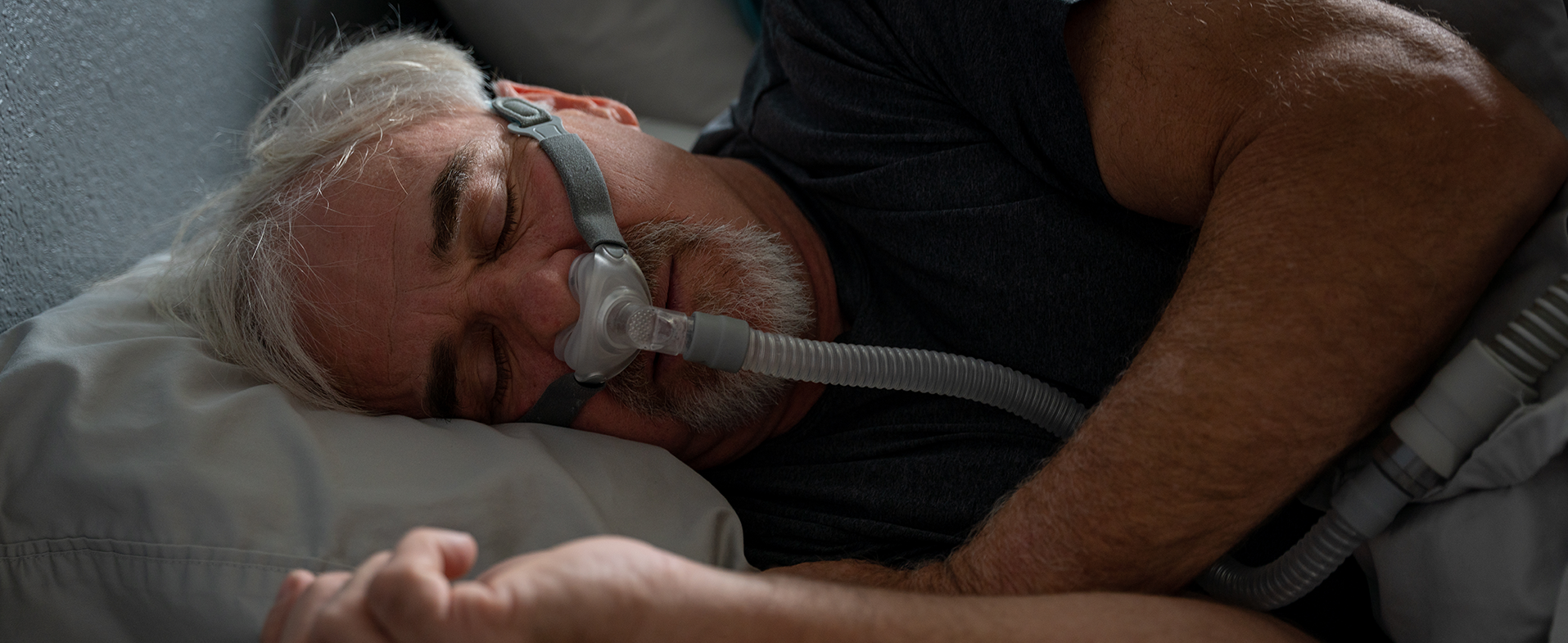
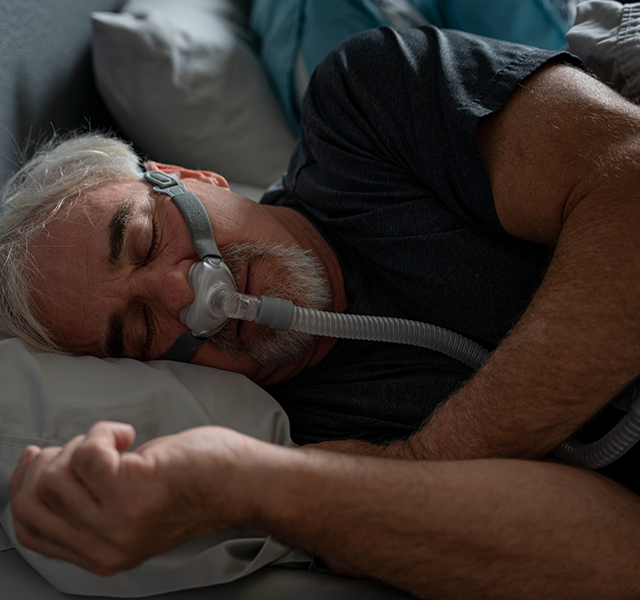
Some are specifically designed CPAP pillows—made to help facilitate the best position for those who sleep with a continuous positive airway pressure (CPAP) machine. Sleeping with a CPAP machine can be awkward and uncomfortable since it requires wearing a face mask that’s connected with a hose to the machine. CPAP pillows are designed to accommodate the mask and hose so you can sleep more comfortably.
Sleep Apnea Treatment Options
“CPAP is still considered the gold standard treatment for sleep apnea,” says Dr. Plawecki. “But over the last couple decades, the number of additional treatment options has grown significantly.”
Sleep apnea surgeries may involve removing large tonsils or excess tissue in the throat or rearranging or stiffening structures in the throat to open the airway. “We also use implanted nerve stimulation devices that help move the tongue forward and keep the airway open while you’re sleeping,” explains Dr. Plawecki. And because losing weight can help improve sleep apnea, weight loss medications are often prescribed to help treat the condition.
“The bottom line is that you shouldn’t rely on a pillow alone to solve the problem,” she says. “But there’s nothing wrong with adding a sleep apnea pillow if you feel it makes you more comfortable and improves your sleep quality.”
Reviewed by Andrea Plawecki, M.D., a sleep medicine specialist at Henry Ford Health.