.svg?iar=0&hash=F6049510E33E4E6D8196C26CCC0A64A4)

/hfh-logo-main--white.svg?iar=0&hash=ED491CBFADFB7670FAE94559C98D7798)
Gua Sha vs. Cupping
These techniques have very similar effects. Gua sha works through pressure, while cupping uses suction. Depending on your specific need, one or both methods may be used. Interested in cupping?
Gua sha may be used to treat a variety of conditions, reduce inflammation, promote wellness and more.
Gua sha is an integrative therapy that uses a smooth-edged instrument to stroke areas over the skin with pressure.
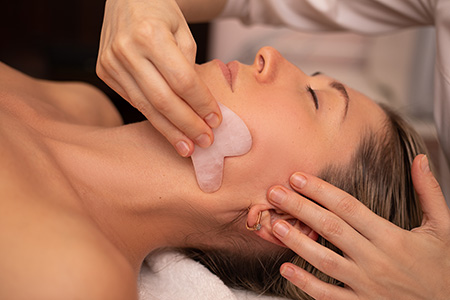
This noninvasive treatment, also known as dermal friction or scraping therapy, dates back thousands of years and is still used widely today in hospitals, the military and professional sports. You may hear variations of it also go by different names, such as Graston Technique® and instrument-assisted soft tissue mobilization (IASTM).
Gua sha therapy is a type of Traditional Chinese Medicine (TCM), which focuses on the concept of qi (pronounced “chee”). As part of the holistic system of TCM, qi factors in physical, mental and emotional well-being, and the relationships between them. TCM includes other integrative treatments, such as massage therapy and cupping.
When gua sha techniques are applied to the skin, the friction dilates blood vessels and increases blood and lymphatic flow. This can bring more oxygen and nutrients to muscles and other tissues in the area, flush out waste products in your body and maintain a healthy fluid balance.

Research shows that gua sha therapy can help in several ways, including:
• Reduced pain
• Increased joint mobility and range of motion
• Reduce muscle tightness
• Increase circulation
• Sports injury recovery and performance enhancement
• Cosmetic purposes
• Treatment for other conditions
It can also reduce inflammation, promote relaxation and balance the immune system.
Gua sha therapy should be delivered by a properly trained and credentialed provider. At Henry Ford Health, it’s administered by our nationally board-certified acupuncturists, who are licensed with the State of Michigan. Your gua sha treatments will also be a part of your medical record, so that all members of your care team have access to your medical history.
Acupuncturists are highly trained medical professionals who must obtain at least a clinical master’s degree, pass national board examinations and become licensed by the state. Like physicians, nurses and other clinicians, they must maintain their licensure and board credentials with continuing education.
Henry Ford Health acupuncturists exceed these requirements. Our team members have added training and certifications, such as oncology, sports medicine, addiction and Chinese Herbal Medicine. Our team also includes some of the state’s only acupuncturists with doctoral degrees, including the DAOM (Doctor of Acupuncture & Oriental Medicine), the most advanced degree available.
Some of the many conditions gua sha therapy can treat include:
· Back, hip, neck, shoulder, knee
· Headaches, migraines
· Carpal tunnel syndrome
· Plantar fasciitis
· Osteoarthritis and rheumatoid arthritis
· Tendonitis
· Temporomandibular (TMJ) pain
· Sports injuries and rehabilitation
· Workout recovery
· Performance enhancement
· Constipation, diarrhea
· Irritable bowel syndrome (IBS)
· Ulcerative colitis
· Immune support
· Stress reduction
· Sleep quality
· Mental and emotional well-being
· Insomnia
· Restless leg syndrome
· Asthma
· Stroke rehabilitation
· Hypertension
· Cosmetic purposes
If you’re receiving other therapies such as chiropractic care, massage therapy or physical therapy, gua sha therapy may be used with these to enhance the benefits.
Gua sha therapy will not interfere with any medications you’re taking. In fact, in some cases, such as for pain management, it is used to help reduce your reliance on them.
Gua sha is generally safe for most people. However, there are some situations where gua sha therapy should not be applied or done so with caution.
Gua sha therapy should not be administered if you have:
• Cancer
• A pacemaker or defibrillator
• A bleeding or clotting disorder such as hemophilia or von Willebrand disease
• Blood clots
• An undiagnosed skin condition, lumps or other irregularities
• Active flare-up of a skin condition
• Thin or sensitive skin
• Open wounds, sores, burns or poor skin condition
• Organ failure
Gua sha therapy may be administered in the following situations, but only with caution and after consultation with your physician:
• Pregnancy
• During menstruation
• While taking blood thinners
• Anemia
• Neuropathy
• Peripheral vascular disease
• Less than two months after a blood donation
At your first appointment, your acupuncturist will review your medical history, discuss your goals and answer any questions you may have. Based on this consultation, a personalized treatment will be recommended.
Gua sha treatments will last up to 30 minutes. Treatment times and frequency can vary depending on your specific condition, needs and goals.
Explore the latest health and wellness news focused on helping you reach your individual wellness goals.

We use cookies to improve your website experience. By using this site, you agree to our Terms of Use. Read our Internet Privacy Statement to learn what information we collect and how we use it.