

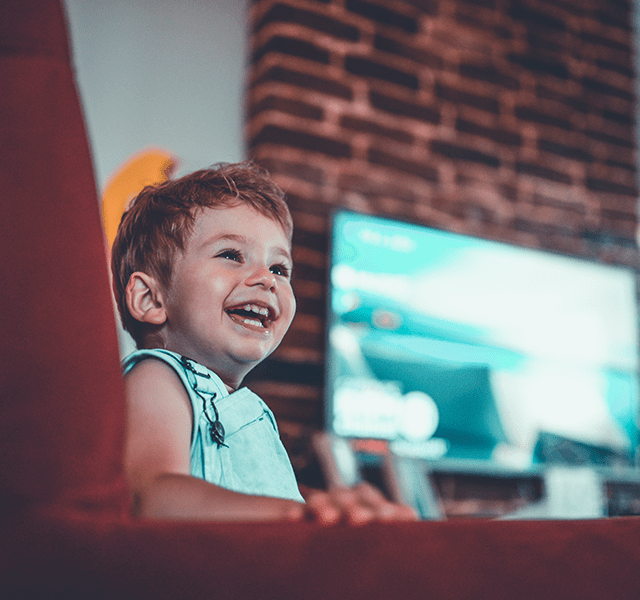
Parenting babies and toddlers is an intense experience. As rewarding as it is, there’s also a lot of time spent changing diapers, warming bottles and reading the same books over and over (and over). It’s no wonder many parents are looking for a break.
Yet turning on the TV might not be the harmless activity it seems to be. Screen time—including background TV—can interfere with a child’s ability to learn language and develop other important skills. Here’s what to know about background television, and what to do instead.
Screen Time Guidelines
The American Academy of Pediatrics publishes screen time guidelines based on the latest science. The guidelines, updated in 2026, recommend the following:
- Avoid screens before 18 months
- Limit screen time to one hour daily for kids ages 2-5
- Prioritize high-quality content that supports learning and social-emotional skills
But what about background TV? Parents often wonder whether it’s okay to turn on the television if the child isn’t facing the screen. Can you catch up on the news while your child plays on the other side of the room? It might seem like a harmless activity, but there are reasons to press pause.
TV and Child Development
It’s no surprise that screens are distracting for people of all ages. That distraction can interfere with a child’s ability to focus. A loud noise or flash of color on the TV screen can pull their attention away from stacking blocks or studying the pages of a board book.
But an even bigger problem may be that background TV competes with a caregiver’s attention. If you’re focused on the screen, you’re less likely to notice that your baby is looking to you for a reaction or is excited about a dog walking past the window.
Children learn best through their interactions with their caregivers and their environment. If your attention is elsewhere, it’s all too easy to miss those opportunities to connect and to teach.
Screen Time and Speech Delays
During the first three years of life, babies soak up the world like sponges. Language and social skills are some of the most important skills they learn during this period. But screen time can interfere with developing those essential skills.
Language is all about repetition, and that repetition comes through interactions with parents and caregivers—things like daily conversation, reading a book and singing together. When parents are more attuned to the TV, they may be less likely to engage in back-and-forth dialogues with their babies. Even if you are chatting, background noise from the TV can make it harder for a child to pick out the words.

Together, those factors can interfere with language learning. In fact, studies show that kids who spend more time on screens are at increased risk of language delays.
What to Do Instead of TV
I never want parents to feel guilty, but it always helps to have another plan. Here are some things you can do instead of turning on the television when you need a break:
- Pick a tune: If you’re craving a backdrop for your daily routine, put on some music instead. Sing to your baby, dance together or just enjoy the background melody while you and your little one go about your day.
- Be selective: If you do choose to switch on the TV, keep it short and aim for high-quality programming. The best options are usually interactive. Choose an educational show that prompts toddlers to get up and dance or respond to questions, for example.
- Watch together: If you choose to turn on the TV, the best way to watch is together. That gives you opportunities to reinforce any educational messages by talking about what you’re watching. Instead of thinking of the show as the main event, treat it as a jumping-off point for conversation and teaching.
- Model good screen time behavior: Kids are always watching—and they often learn more from what we do than from what we say. If you spend the day glued to a screen, they’ll notice. It’s never too early to establish healthy boundaries around your own screen time use—no screens at the dinner table or in bed, for instance. It’s a win-win that helps you focus on your family while modeling healthy screen-use habits for your kids.
- Get active: TV is mostly passive entertainment. But kids learn best when they are actively engaged through multiple senses. So find ways to get active. Instead of watching a video about colors, for instance, take a walk and point out things in your neighborhood that are red, blue and green.
The goal isn’t to be scared of television, but to create more opportunities to connect and grow. Screens are all too tempting, at any age. But it helps to remember that you are your baby’s favorite source of entertainment.
Stacy Leatherwood, M.D., is a board-certified pediatrician and the physician champion for childhood wellness. She sees patients at Henry Ford Medical Centers in midtown Detroit. Learn more about Dr. Leatherwood.

