

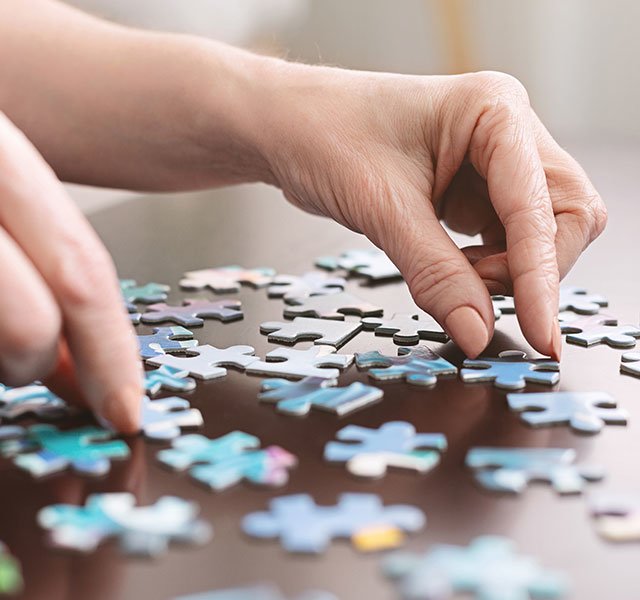
When it comes to busting boredom, pulling out the puzzles, crosswords and board games can be a huge hit. And, it turns out these games also come with a welcome side effect: They're good for your brain.
"Board games, puzzles, crosswords are more than just tools to pass the time. They engage the mind and facilitate a sense of well-being and accomplishment," says Emilyn Anderi, M.D., a family medicine specialist at Henry Ford Health. Here, Dr. Anderi shares insight on how games engage in the brain and can benefit your overall wellbeing.
Bolstering Your Brain
Q: How does being bored affect health and well-being?
Most of us know what it feels like to be bored — the waning interest and wandering mind. And while it might be easiest to turn on the TV or start scrolling through your phone, these activities can only amplify feelings of increased anger, irritability, anxiety, insomnia and poor concentration.

Q: What are some ways to keep the mind engaged?
Studies consistently show that brain games help stave off cognitive decline. But you don't have to stick with store-bought games. Get creative and make up your own — things like scavenger hunts combined with nature walks or family trivia. It doesn't have to be complicated.
Q: Where do digital games fit in?
Digital games not only incorporate several players, but they can also foster social connection when players are miles apart. Plus, video games require multitasking and fast-paced information processing, both of which are important skills for children to develop. The caveat: It's important to ensure screen time for children falls within acceptable limits. Studies suggest excessive video game playing can lead to attention deficits and even addictive behaviors. A few basic guidelines for kids and digital media:
- Avoid screen time for kids who are under 2 years old.
- Restrict screen time to one hour or less for children ages 2 to 5.
- Restrict screen time over two hours for older children and discuss media time with your kids.
Q: What are some things people can do to enhance cognitive functioning?
There are several simple ways you can bolster brain activity each day. Here are a few favorites:
- Learn a new fact or word. You can tailor words and facts to all ages and skill levels.
- Put together a jigsaw puzzle. Originally invented as a way to teach geography, jigsaw puzzles now come in seemingly endless options. They also help improve visual-spatial reasoning and short-term memory.
- Play with art. Select a masterpiece or an artist and study their methods. Better yet, start crafting your own masterpiece. Don't consider yourself a budding artist? Purchase a few coloring books or try your hand at extreme dot-to-dot workbooks.
- Explore something new together. Learn more about different historical events, or if you have children, you can help them learn about the basics of the solar system with sticker art on the ceiling.
Q: What about physical games?
Studies show that physical movement can improve working memory, response times and processing speed. There's even evidence to suggest that people learn and retain information better when movement is involved. Whenever possible, incorporate physical activity into game play, especially if you have young children. Play jump rope games, try hide and seek, or dodge ball and tag. All of these games demand engaging both body and mind.
Engaging Your Brain Throughout Life
When it comes to staying healthy throughout life, it's critical to exercise your mind. Brain-stimulating activities are important for people of all ages.
"Don't limit yourself to one gaming modality," Dr. Anderi suggests. "Instead, incorporate many different types into your routine, punctuated by periods of physical exercise, to reap the most benefit."
Reviewed by Emilyn Anderi, M.D., family medicine physician at Henry Ford Medical Center - Harbortown.

