
Finger pricks, insulin injections and more: diabetes is a condition that requires constant vigilance. To manage it effectively, you have to be proactive at all times. But now, instead of doing it all yourself, there are new devices that can do the hard work for you.
Here, Kathleen Estrada, M.D., an endocrinologist at Henry Ford Health, shares several tech advancements that are making waves in diabetes management:
Options For Diabetes Management
Glucose monitoring devices that don’t require a finger prick.
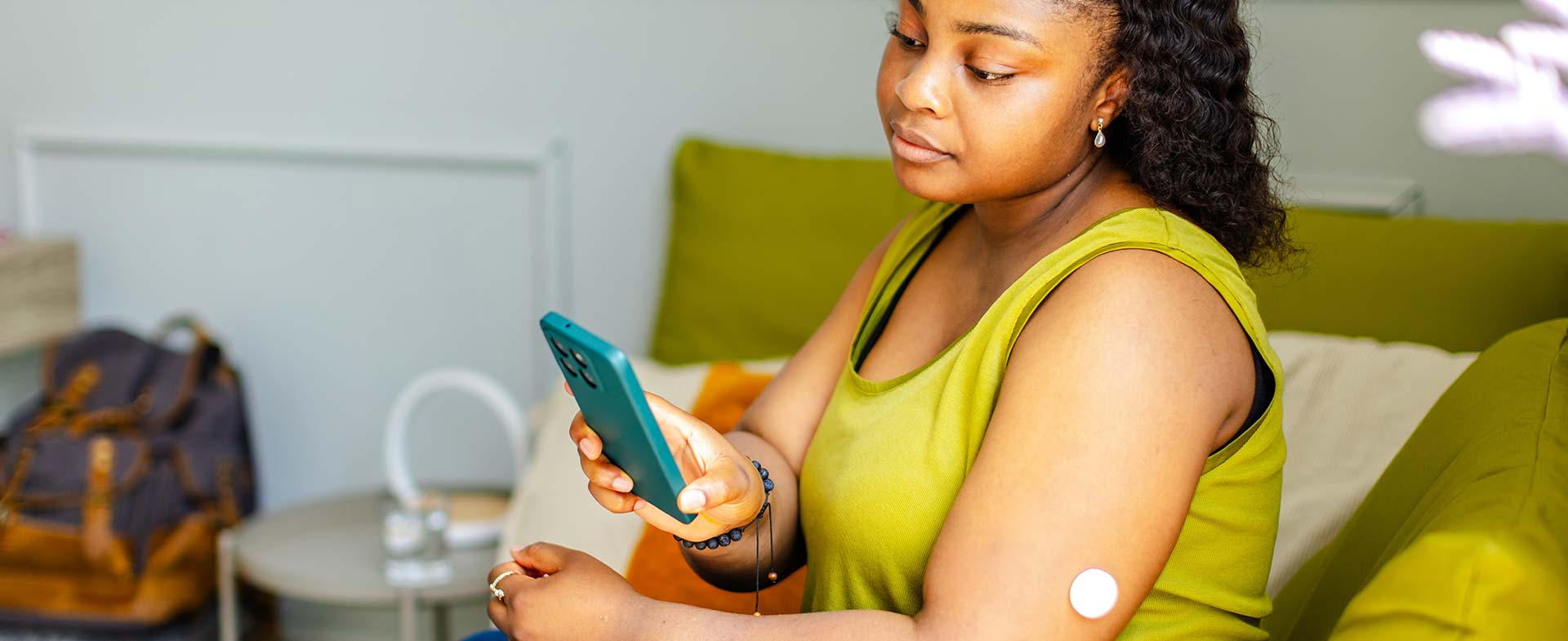
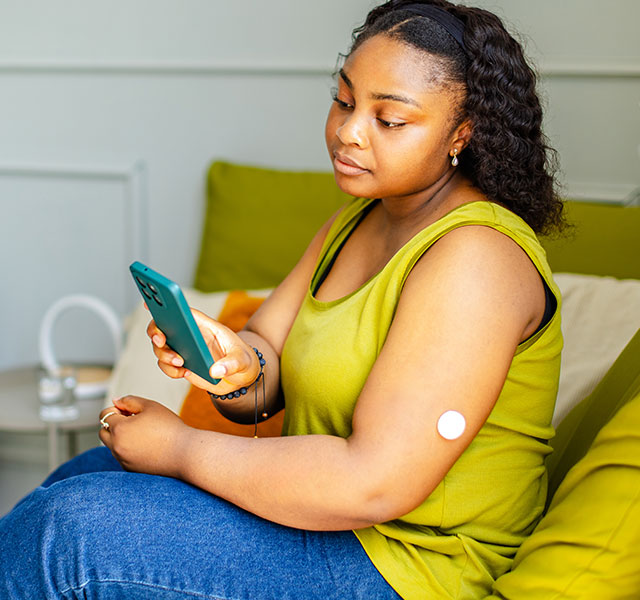
Historically, monitoring your blood sugar levels throughout the day required pricking your finger each time to test your blood. But continuous glucose monitors, a small patch that you stick to the back of your arm, regularly monitors glucose levels throughout the day and night. The newest versions of these monitors last longer and don’t need to be changed daily (with some lasting up to 15 days).
“These are helpful because the data collected from the monitor is sent to your phone and can then be remotely transmitted to your healthcare provider offices to review if needed in between visits and during visits,” says Dr. Estrada. “The sensors themselves also allow patients to better learn how foods and activities that affect their diabetes.”
Closed-loop insulin pumps that automatically deliver insulin.
Closed-loop insulin pumps work together with your continuous glucose monitor to respond to your body’s glucose readings. When your glucose monitor registers that your blood glucose levels are low, your insulin pump can make automatic adjustments to help balance your insulin levels to a more targeted range.
“Having these pumps make automated changes takes a lot of the burden of diabetes management off of patients,” says Dr. Estrada. “Many options for these pumps are available, so it is important to keep an open mind; if you don’t have a great experience with one brand, there are many others to try!”
Smart insulin pens that help keep track of your insulin needs.

Diabetes Management At Henry Ford Health
“Smart pens are programmed to deliver insulin based on glucose readings and carbohydrate counts,” says Dr. Estrada. “The pens calculate insulin doses for patients and reminds them to take injections.”
Many smart pens are paired with glucose sensors, which makes it easy for patients—and doctors—to look at their data and make changes to their regimen.
Smartphone apps for diabetes management.
While many of these tech options include smartphone applications to help them monitor your glucose levels and insulin needs, other independent apps can help with counting carbs and calculating insulin doses based on your carb ratio. Just make sure that if you are considering a smartphone app to help with your diabetes management, you use ones that are FDA-approved.
All of these options are approved for use in patients with type 1 and type 2 diabetes. Even if you don’t require regular insulin injections to manage your blood glucose levels, studies show that there is still a benefit of using a continuous glucose monitor.
What To Do If Diabetes Tech Fails
While diabetes tech is quite reliable, there is nothing more important than how you feel beyond your glucose readings.
“If how you feel doesn’t match with your glucose readings or if your device reports a sensor error, it is still recommended to test your glucose with a finger stick for the most accurate reading,” says Dr. Estrada.
Reviewed by Kathleen Estrada, M.D., an endocrinologist who sees patients at Henry Ford Medical Center – Columbus and Henry Ford Medical Center – New Center One.

