
It’s easy to get caught up in the ads for cool fitness gadgets and equipment. Companies and influencers try to convince us that we need to buy everything from high-tech wearables to impressive weight machines in order to get fit. But do you really need these things to get in shape?
Building Strength Without Equipment
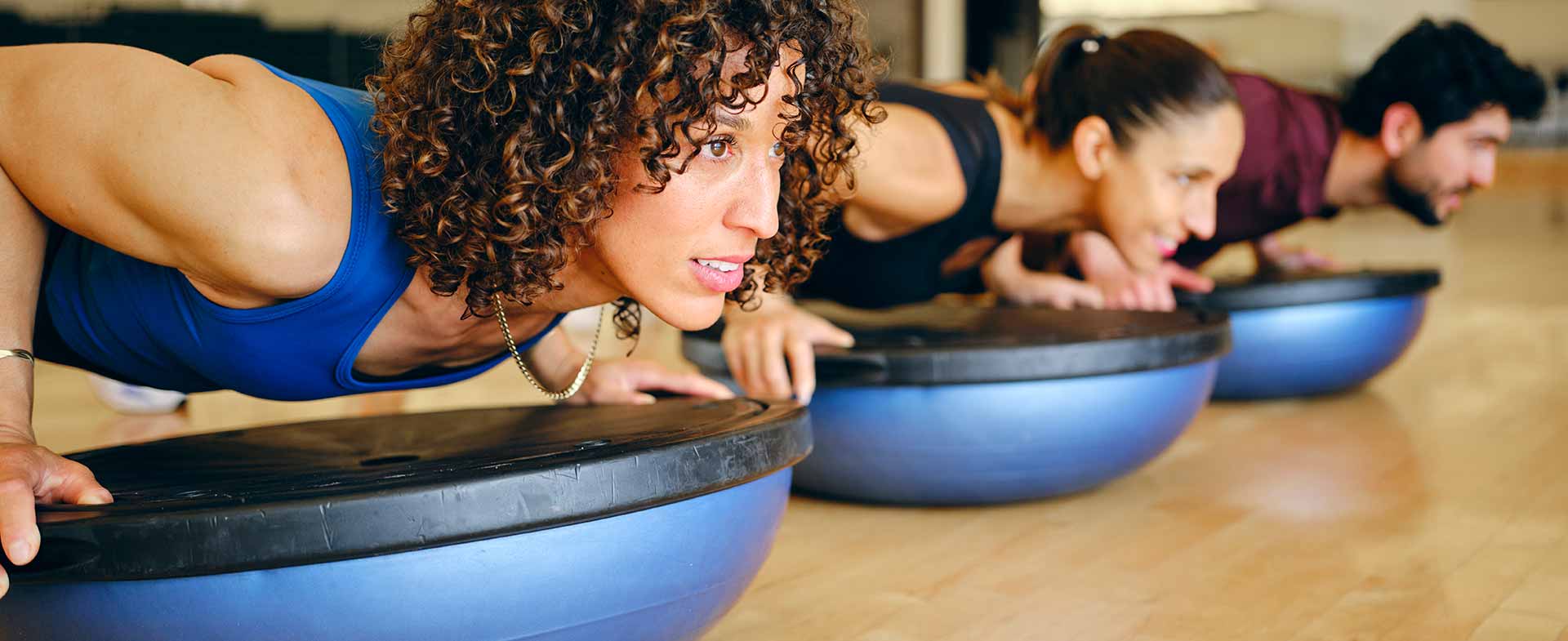
Items like stability balls, vibration plates and health tracking wearables may look exciting, but they’re not necessary. Your body is all you need to perform bodyweight exercises, which can increase strength and fitness for free.
You can do bodyweight exercises nearly anywhere with a little floor space. These exercises strengthen the movement patterns you use in everyday life, like squatting to pick something up or getting up from the floor. If you’re just getting started with exercise, they’re a great way to build muscle and increase strength with zero financial cost.
Not sure how to do bodyweight exercises? Start with a few basics that target different muscle groups:
- Lunges work your lower body, including your quads, hamstrings and glutes, while also challenging your balance and coordination. They build single-leg strength, which is important for walking, climbing stairs and preventing falls.
- Push-ups build strength in your chest, shoulders, triceps and core. If you can’t do them on the floor, start by pushing against a counter or wall and work your way down to a lower surface, such as a step, as you get stronger.
- Planks build core strength and stability to support your spine, improve posture and help prevent back pain.
- Squats strengthen your quads, glutes and core while improving mobility in your hips and knees. They mimic the movement of sitting down and standing up.
Does Cardio Exercise Require Gadgets?
Building strength with bodyweight exercise is important, but don’t forget about your cardiovascular health. The U.S. Department of Health and Human Services recommends 30 minutes of moderate-intensity aerobic exercise, five days a week.
One of the best ways to get started is with regular walking, which can:
- Boost heart health
- Burn calories and help with weight loss
- Improve mental health
- Lower blood sugar
You can reap all these benefits with nothing more than a pair of supportive shoes. Some people use fitness or mileage trackers, but even those are optional.
Just choose a path to walk—it can be around your block or to a local park and back. Use a watch to time yourself if you choose. If 30 minutes feels overwhelming, start where you are. Even 11-minute exercise breaks can benefit your health.
If you don’t love walking, you could also try biking or swimming. The important part is to get your heart rate up to a moderate intensity. That means you can pass the talk test: Your breathing is harder than normal, but you can still talk.
You don’t need a gym membership or a treadmill to do cardio when you can’t get outdoors. Walk up and down the stairs in your house. Put on your favorite music and dance in your living room. Check whether a local mall or community gym allows the public to walk laps.
Consider creating a schedule, such as bodyweight exercises three days a week and walking on the other days. You could also take a walk after your strength training. These two types of exercise build muscular strength and cardiovascular endurance—the pillars of overall fitness.
Adding Resistance Bands to Your Workout

Go Where The Pros Go
After several weeks of consistency with bodyweight exercises, you might find yourself ready for an additional challenge. Resistance bands are an effective way to increase strength without a big investment or space requirements.
There’s scientific evidence that using these large, thick rubber bands improves fitness. They’re also one of the most versatile and least expensive fitness “gadgets” you can buy.
Simply adding these bands to your bodyweight routine can challenge your muscles in new ways. You can use them for many different exercises, including:
- Banded chest press: Wrap a band around your back and hold the ends in each hand. Press forward as if doing a push-up while standing to target your chest and shoulders with adjustable resistance.
- Banded lateral raise: Stand with feet together and place the middle of the band under one foot. Hold the ends of the band in each hand and raise your arms slightly forward and outward, with a soft bend in the elbow, until they reach shoulder height. This exercise targets part of your shoulders.
- Banded rows: Step on the middle of a band and hold the ends. Bend forward slightly at the hips and pull the bands back toward your hips, squeezing your shoulder blades together as you pull. You’ll be working your back muscles.
- Banded squats: Place a resistance band around your thighs, just above your knees, and perform squats as usual. The band forces you to push your knees outward, activating your glutes more intensely.
The Secret to Exercise Success
The most important part of your fitness journey isn't what equipment you use or what gadgets you own. It's whether you show up.
A simple routine of bodyweight exercises and walking, performed consistently three to five times per week, will deliver results. You'll build strength, improve your cardiovascular fitness and boost your energy. None of that requires trendy gadgets or a gym membership. You only need your body and the willingness to move it.
Nick Parkinson, M.Ed., AT, ATC, TSAC-F is the supervisor of athletic training and sports performance at Henry Ford Health. Learn more about Nick.

