
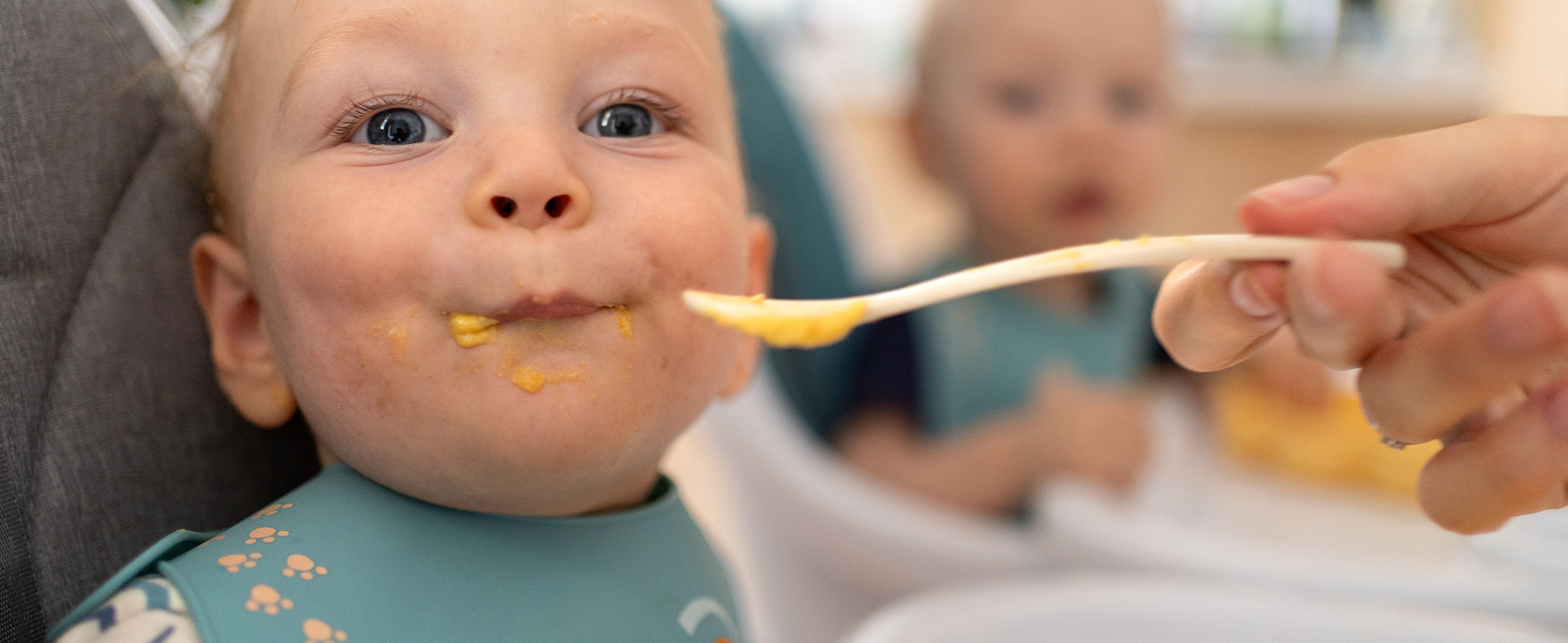
If you've been scrolling through parenting forums lately, you've probably seen alarming statistics about baby food. One study found that approximately 70% of baby food is considered “ultra-processed.” For busy parents already juggling so much, this can feel like yet another thing to worry about.
But don’t toss out all of your packaged baby food just yet. Allegra Picano, MS, RD, a registered dietitian at Henry Ford Health, helps parents navigate the world of baby food nutrition.
What Does ‘Ultra-Processed’ Actually Mean?
There isn't an official, scientific definition for ultra-processed food. The term generally refers to foods made in an industrial setting that contain artificial colors or flavors, artificial sweeteners, preservatives and other additives. Basically, it’s food made in a factory that you wouldn’t be able to easily make at home.
“Ultra-processed usually refers to foods that are not in their natural state,” says Picano. “The food has been through some sort of processing to alter its natural taste, texture or form. Sometimes this processing makes foods hyper-palatable, more colorful or just more marketable. During processing, some or all of the food’s original nutritional content may be stripped out.”
But just because it’s not picked directly from your garden doesn’t mean it’s ultra-processed and unhealthy. “It’s important to distinguish between some processing—which can be good—and ultra-processed,” Picano says. “A jar of sweet potatoes with just sweet potatoes and water is technically processed because it was canned. However, if it doesn’t contain color, sugar, salt or other additives, it’s probably not considered ultra-processed.”
This type of light processing in baby food actually has many benefits. “The canning process helps ensure that the vitamins and freshness are locked in so it’s safe and healthy for your baby,” says Picano. “Canned baby foods also save parents a lot of time and make it more convenient to give your baby fresh fruits and vegetables.”
Is Baby Cereal Unhealthy?
What about iron-fortified baby cereal? It’s made from refining grains in factories and is technically “ultra-processed.” This doesn’t mean it’s always a poor choice.
“Fortified baby cereal can be a good option when introducing solid foods to infants,” says Picano. “Breastfeeding infants lose their iron stores after about four to six months. Feeding an iron-fortified cereal is an easy way to provide this nutrient. These foods may be considered ultra-processed to some, but this is one exception that can be beneficial.”
Still, Picano says, use cereal in moderation. “Offer plenty of whole foods too, such as fruits, vegetables, eggs and unprocessed meat when they are developmentally ready,” she advises. “Try to make sure the majority of their diet is lightly processed or unprocessed. It doesn’t have to be an all-or-nothing approach.”

Pediatrics at Henry Ford Health
Processed Toddler Foods
Store shelves are also full of packaged toddler foods, such as yogurt pouches and toddler meals. Are these good options?
“Ready-made meals, chicken nuggets and shelf-stable yogurt products are usually considered ultra-processed, so it’s best to limit them,” says Picano. “Many of them contain sugar, salt and other additives. It doesn’t mean your child can never have them, but try to use them less often than foods in their natural form.”
For example, offer plain, cooked chicken breast instead of chicken nuggets. Or feed your toddler unsweetened yogurt with a touch of real fruit instead of a sweetened yogurt pouch. And when they’re ready, they can have plain cow’s milk instead of toddler milks, which often contain sweeteners and other unneeded ingredients.
Developing a Taste for Unprocessed Foods
What’s the harm in a little sugar or salt? After all, adults eat like this every day, right?
“The first few years of life are crucial for developing taste preferences and eating habits,” explains Picano. “If babies consistently eat foods high in sugar or salt, they may develop a preference for these flavors that follows them throughout life.”
Young children's taste buds are much more sensitive than adults’. “What tastes bland to us can be flavorful and exciting to an infant,” says Picano.
How Do You Avoid Ultra-Processed Baby Food?
You can limit or avoid ultra-processed options if you:
Look for a short ingredient list
The fewer ingredients, the better. Look for simple options like just the vegetable or fruit plus water. “Products marketed toward toddlers can still contain artificial colors, flavors, sweeteners and salt,” says Picano. “Choose foods with a shorter ingredient list.”
Choose plain foods
Young taste buds don't need extra sweetness or saltiness—and those additives aren’t ideal for growing bodies. Plain options such as unsweetened yogurt with fruit, meat without salt and whole grain pasta offer lots of nutrition without the hyper-palatable taste.
Seek Expert Advice When Needed
If you’re unsure about what your baby should be eating, talk to your pediatrician. They can refer you to a registered dietitian who can help identify any nutritional gaps and create a plan that works for your family.
“At the end of the day, we want babies to get the vitamins, minerals and nutrients they need to grow,” says Picano. “You can achieve this even with the occasional processed foods. Just aim to make ultra-processed foods a small part of their overall diet, not the everyday menu.”
Reviewed by Allegra Picano, MS, RD, a registered dietitian-nutritionist at Henry Ford Health.

