

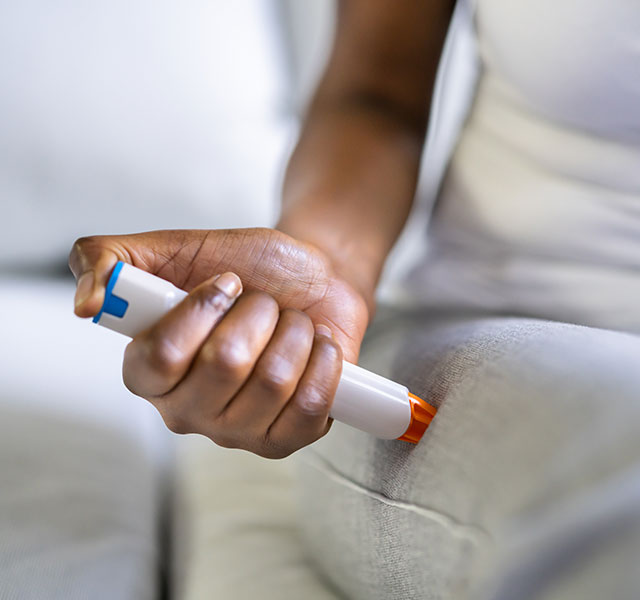
If you have severe allergies, you probably carry an epinephrine auto-injector, or EpiPen®. By reversing the effects of an allergic reaction, the medication can literally be a lifesaver. But epinephrine can also interact with many other prescription and over-the-counter medications, potentially causing side effects or making the shot less effective.
Here’s what to know if you or a loved one uses EpiPens.
How Do EpiPens Work?
During an allergic reaction, blood pressure can drop rapidly. “This condition, known as anaphylaxis or anaphylactic shock, is an emergency situation,” says Christian Nageotte, M.D., an allergist at Henry Ford Health.
EpiPens contain the drug epinephrine, which acts on the heart and blood vessels to boost the heart rate and restore blood pressure. New epinephrine nose sprays work the same way. “Epinephrine is very effective and works very quickly,” Dr. Nageotte adds.
The drug targets alpha and beta receptors, which are found on the heart and in other tissues throughout the body. Because epinephrine acts on those receptors, any medication that also affects those receptors can potentially interact with EpiPens.
Epinephrine Medication Interactions
Epinephrine can interfere with other medications in different ways. Some drugs can make EpiPens less effective at treating a severe allergy. Others have the opposite effect, increasing the effects of epinephrine.
Drugs that make epinephrine less effective
Some medications can make your EpiPen less effective, including several common prescription drugs. “Epinephrine works by increasing heart rate and blood pressure. But that means it interferes with some common medications that treat high blood pressure,” Dr. Nageotte says.
Drugs that may make epinephrine less effective include:
- Beta-blockers like atenolol and propranolol, which are frequently used to treat high blood pressure
- Alpha-blockers like doxazosin and prazosin, which are also used to treat high blood pressure
- Ergot alkaloids like ergotamine or dihydroergotamine, which are used to treat migraines
In most cases, these medications don’t completely prevent the epinephrine in an EpiPen from working. But they can reduce its effectiveness. In some cases, doctors can give patients a medication called glucagon that overrides the effects of drugs like beta blockers, allowing epinephrine to work in an emergency.
Drugs that increase the effects of epinephrine
Other drugs turn up the volume on epinephrine’s effects, increasing the risk of heart-related side effects, like very high blood pressure or an irregular heartbeat.
Drugs that may increase the action of epinephrine include:
- Some rescue inhalers, like albuterol, which is used to open the airways during an asthma attack
- Antihistamines like chlorpheniramine and diphenhydramine (Benadryl), which are commonly used to treat allergies
- Tricyclic antidepressants including imipramine or clomipramine, which are used to treat depression and other mental health disorders such as obsessive-compulsive disorder
- Thyroid medications like levothyroxine, which is used to treat hypothyroidism (underactive thyroid)
EpiPens, Alcohol and Caffeine
One question many people worry about: What should you do if you’ve been drinking alcohol? Fortunately, epinephrine is still safe to use, Dr. Nageotte says. “If you’re having a severe allergic reaction, don’t hesitate to use your EpiPen, even if you’ve been drinking,” he adds.
Caffeine, on the other hand, may interact with EpiPens, potentially increasing the action of epinephrine. For that reason, it’s a good idea to talk to your doctor if you’ve been prescribed an EpiPen and consume a lot of caffeine—especially if you have heart problems. “But most people would have to ingest very high quantities to see any effect, and even with caffeine, you should always use your EpiPen if you’re experiencing anaphylaxis,” he says.

Need An Allergist?
How to Use EpiPens Safely
What should you do if you or a loved one relies on an EpiPen and takes other medications?
- Talk to your doctor: “If you’re taking one of these medications, it’s important not to stop taking it without talking first to the prescribing doctor and your allergist,” Dr. Nageotte stresses. Your doctor might help you find alternative medications that don’t interfere with epinephrine. If that’s not possible, they can discuss the pros and cons and help you plan what to do if you need to use your EpiPen.
- Get emergency treatment: Whether or not you’re taking any other medications, it’s important to seek out medical attention after using epinephrine. It’s a short-acting drug, lasting only about 20 minutes. Patients may need additional emergency care after it wears off and should be closely monitored, Dr. Nageotte says. “I advise all of my patients to call 911 or go to the closest emergency room after using their EpiPen.”
- Keep a list: Make a list of the medications you take regularly and keep it in your wallet or somewhere handy. You (or your medical team) can refer to it in the case of an allergy emergency.
- Store your EpiPen securely: Epinephrine is unstable at high or low temperatures, so don’t let it freeze or get too hot. “Store it at room temperature, ideally between 56 and 86 degrees Fahrenheit,” Dr. Nageotte says. “Don’t store in the fridge or keep EpiPens in your car.”
But the most important thing to remember? Always use your EpiPen if you need it.
It’s important to be aware of possible drug interactions. But there are no medications that should stop you from using an EpiPen if you’re having a life-threatening allergic reaction.
“Epinephrine is the best tool we have for quickly treating anaphylaxis,” Dr. Nageotte says. “If you’re having a life-threatening reaction, no matter what medications you take, don’t hesitate to use an EpiPen.”
Reviewed by Christian Nageotte, M.D., an allergy and immunology specialist who treats children and adults at Henry Ford Medical Center - Columbus, Henry Ford Medical Center - Fairlane and Henry Ford Medical Center - Sterling Heights.

