

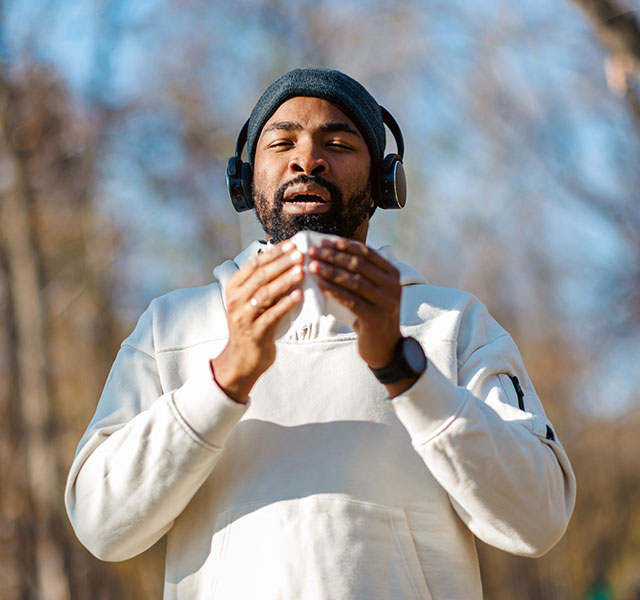
You’ve been hitting the gym five days a week, but now you’ve come down with a scratchy throat and runny nose. Should you push through your workout or take a rest day?
It’s a common dilemma, especially for dedicated fitness enthusiasts and athletes during cold and flu season. Nessreen Rizvi, M.D., an internal medicine specialist and urgent care physician at Henry Ford Health, explains when it’s safe to exercise while ill and when you should stay home.
Above the Neck vs. Below the Neck for Working Out
You may have heard that exercise is okay if your symptoms are “above the neck,” and to avoid workouts if you have symptoms “below the neck.” There’s some truth to this guideline, with a few caveats.
“A mild sore throat or a runny nose would usually be considered above-the-neck symptoms,” says Dr. Rizvi. “It’s usually fine to work out in these cases, but opt for a lighter session.”
Below-the-neck symptoms are generally things you feel in your chest or throughout your body. These symptoms are your body’s way of telling you it needs rest, not a run.
When to Skip Exercise

Same Day Care At Henry Ford
Dr. Rizvi says you should avoid exercise if your illness is causing:
- Body aches: This is your body telling you it needs to focus energy on fighting infection.
- Chest congestion or persistent cough: A productive or hacking cough can be a sign that you have a more severe cold, the flu or COVID-19. Working out with one of these illnesses could make things worse.
- Fever: “If you have a fever, you do not want to increase your body temperature even more by exercising,” Dr. Rizvi explains. A temperature of 100.4°F or higher is considered a fever, though even a low-grade fever warrants caution.
- Fatigue: If you’re weak or more tired than usual, your body is sending you a message. “Your immune system needs to be 100% focused on fighting the infection,” Dr. Rizvi emphasizes. “If you’re trying to push yourself too hard, that can prolong your recovery from the illness.”
- Gastrointestinal (GI) symptoms: Nausea, vomiting or diarrhea, commonly called the “stomach flu,” cause you to lose fluids and electrolytes. “Dehydration is a real risk with any kind of GI virus,” says Dr. Rizvi. “These viruses are also very contagious. Stay home, rest and drink fluids.”
How to Modify Your Workout When You’re Sick
Light exercise can boost your immune system and increase blood flow, which could help relieve mild, above-the-neck symptoms. The key word here is light. Even with mild symptoms, Dr. Rizvi recommends reducing the intensity and duration of your workouts.
You can modify your workout if you:
- Hydrate more than usual: You need extra fluids when you’re sick, especially if you’re exercising. “Electrolyte drinks can be very helpful, but choose low-sugar varieties,” advises Dr. Rizvi.
- Reduce intensity: Skip the sprint intervals or heavy lifting. Opt for light jogging, walking or easy cycling instead.
- Shorten duration: If you normally work out for an hour, cut it to 30 minutes.
- Stop if symptoms worsen: If you start feeling worse or get dizzy or lightheaded, call it a day.
Should You Avoid the Gym With a Cold?
Even if you feel well enough to exercise, consider whether you should go to a public gym. If you’re contagious, you risk spreading illness to others.
“For the first couple of days while you’re symptomatic, exercise at home or outdoors if you can,” Dr. Rizvi recommends. “If you really have to go to a gym, sanitize and make sure you wash your hands and wipe the weights down with disinfectant after you use them.”
For illnesses like flu or COVID-19, don’t risk it—for yourself or others. Wait until your symptoms have improved and you’ve been fever-free for 24 hours before returning to the gym.
Cold Medications and Exercise Risks
Many common, over-the-counter cold medications can be unsafe if you’re exercising. Decongestants can make you feel lightheaded or dizzy, while cough medicines may cause drowsiness.
“You have a higher risk of getting hurt if you work out while you’re taking these medications,” says Dr. Rizvi. “If you’re lifting weights while feeling foggy from medication, it’s harder to focus on proper form. You could be setting yourself up for a serious injury that sidelines you for weeks.”
Can You Sweat Out a Cold With Exercise?
You’ve probably heard someone say they’re going to “sweat out” their cold with exercise. Is there any truth to this?
“Light exercise can help a mild cold if you feel well enough to work out,” says Dr. Rizvi. “But never try to sweat out a fever. You could raise your body temperature too high, and your immune system needs its energy to fight the infection.”
Can Antibiotics Help With a Cold or the Flu?
It’s tempting to seek out a prescription when you’re dealing with a miserable illness. But if you have a cold, flu or COVID-19, antibiotics won’t help.
“Antibiotics don’t do anything for viral infections,” says Dr. Rizvi. “Taking these medications when you don’t need them can increase your risk of developing antibiotic resistance. And they can give you a false sense of security that you’re no longer contagious, when in fact, you are.”
It’s Okay to Miss a Workout When You’re Sick
Many people worry about losing muscle or cardio fitness if they skip their exercise routine. But missing a few days won’t derail your fitness goals.
“Even if you miss a whole week, you’re not going to lose all the progress you’ve made,” Dr. Rizvi says. “If you push yourself when you’re sick, you could actually set yourself back even longer. Listen to your body, and give yourself permission to rest when you need it.”
Reviewed by Nessreen Rizvi, M.D., an internal medicine specialist and urgent care physician at Henry Ford Health.

