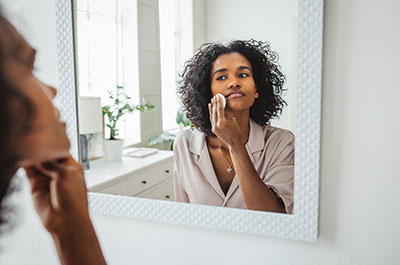
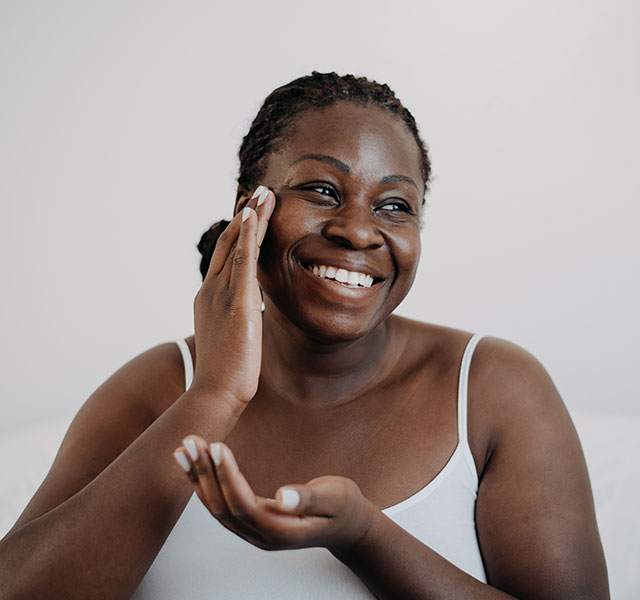
Your skin is constantly facing internal and external changes—from hormonal shifts to the weather. Still, many people reach for the same skincare products day in and day out, which could leave you with less-than-stellar results.
If you’re using the same cleansers, creams and potions on repeat, a more flexible strategy could bring out the best in your skin. Henry Ford Health board-certified dermatologist Natalie Matthews, M.D., M.Phil., discusses the benefits of changing your skincare with the seasons of life.
Should You Adjust Your Skincare Routine Around Your Period?
Some people experience an increase in acne breakouts in the week before their period, when hormones like testosterone and progesterone may increase. At higher levels, these hormones can impact oil production and skin barrier function, which can increase your risk of acne breakouts.
“People with hormonal acne can use treatments every day to prevent pimples,” Dr. Matthews says. “Over-the-counter products containing benzoyl peroxide, salicylic acid, azelaic acid or retinoids like adapalene can help manage menstrual breakouts. These treatments are most effective when you use them consistently.”
If your skin is on the dry side, however, you may not be able to tolerate stronger acne products. Dr. Matthews recommends partnering with a dermatologist to find the right balance. “There are certain medications that are specific to hormonal acne that only a dermatologist can prescribe,” she explains.
Mastering Menopausal Skincare
Even if you’ve had oily skin all your life, menopause can sap the moisture out of your skin. “As estrogen levels drop, the skin becomes thinner and drier,” says Dr. Matthews.
If you’re noticing flaking, redness or dryness, go back to basics. “For menopausal skin, pick fragrance-free products made for sensitive skin,” says Dr. Matthews. “Also choose thicker moisturizers like creams or ointments rather than lotions, because they seal in water better.”
If you have acne breakouts, look for moisturizers labeled as non-comedogenic, which means they won’t clog pores. You could also consider retinoids, which can help fine lines, skin texture and prevent pimples.
Dr. Matthews recommends talking to a dermatologist before using retinoids, however. “While retinoids are an excellent tool for acne, they can cause dryness and irritation,” she says. “It’s best to start slowly, using a pea-sized amount, with a fragrance-free, gentle moisturizer on top."
If your dermatologist does recommend retinoids, a daily sunscreen of at least SPF 30 is a must. “Proper sun protection can help prevent further skin irritation and wrinkling,” says Dr. Matthews.
Changing Your Skincare With the Seasons

Your wardrobe probably changes when the temperatures rise and fall, and your skincare routine should too. “Hotter temperatures and high humidity may make your skin more oily because your sebaceous glands can become more active,” says Dr. Matthews.
First, choose oil-free or water-based moisturizers when the mercury rises. “If your skin feels oily, use gentle, non-comedogenic cleansers and lightweight moisturizers,” says Dr. Matthews. “You may want to consider a product with anti-acne ingredients. Consult a dermatologist if finding that balance between oily and overly dry is challenging.”
Protect your skin in the winter, when the weather is colder and drier, by moisturizing liberally and frequently. “Use thick, lipid-rich ointments or water-in-oil creams containing petrolatum, ceramides or paraffin,” says Dr. Matthews. “Apply your moisturizers immediately after bathing, while your skin is still damp, to maximize water retention and restore your skin's barrier.”
Finally, consider using a gentler cleanser that’s non-foaming, soap-free and has a neutral to low pH (about 4.5 to 7 on the pH scale). These types of cleansers don’t irritate, dry or disrupt the skin barrier as much as those that usually produce foam.
And whether it’s 8 or 80 degrees outside, one thing is non-negotiable: sun protection. “The sun’s rays damage our skin year-round, so wear a minimum of SPF 30 sunscreen every day regardless of whether it’s winter or summer,” Dr. Matthews advises.
Listen to Your Skin’s Needs
Your skin’s needs change throughout the year—and throughout your life. Though it’s tempting to stick with our favorite products for years, this may not be the best approach.
“Our skin’s needs shift with seasons and over time, so don’t be afraid to modify your skincare regimen if you need to,” says Dr. Matthews. “Your skin is an organ, and it will look its best when you give it the care it needs.”
And if you’re overwhelmed by all the options out there or not getting the results you want, talk to your dermatologist. “We’re here to help you achieve healthy skin at every age and stage of life,” explains Dr. Matthews.
Reviewed by Natalie Matthews, M.D., M.Phil., a board-certified dermatologist who sees patients at Henry Ford Medical Center – New Center One and Henry Ford Medical Center – Plymouth.